
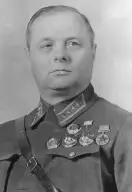
commands the , one of the major formations committed to the pursuit that follows the Moscow counteroffensive. An officer promoted during the autumn 1941 rout, he has the 22nd, 29th and 39th Armies at his disposal, worn down by weeks of fighting in the cold but buoyed by the first German retreat of the war.
Before him stretches the Rzhev salient, a bulge that the German is already working to fortify around the town of Rzhev, roughly 200 km west of Moscow. The Stavka wants to turn the enemy's withdrawal into a collapse: take Rzhev, push toward Sychevka and Vyazma, and close the pocket around Army Group Centre. The orders are pressing: Konev is to seize Rzhev without delay, even as his divisions stretch thin and supply struggles to keep up through the snow.
Konev must choose how: launch a frontal assault on Rzhev to exploit the German retreat while it lasts; envelop the flanks by driving the cavalry toward Vyazma, at the risk of stretching his columns far from their bases; or first consolidate the ground already gained before resuming the offensive on a firmer front.
Eastern Front, January 1942, the general commanding the Kalinin Front: how should the Rzhev salient held by the Wehrmacht be struck?
Konev threw his armies against Rzhev from 8 January 1942, with orders to take the town by the 12th. The cavalry drove some 110 km into the flank of the German , toward Sychevka, but the town of Rzhev held. The Wehrmacht plugged the gaps, encircled the overstretched Soviet spearheads and stabilized the salient. So began the "Rzhev meat grinder": for fourteen months, repeated offensives broke against fortified positions for Soviet losses numbering in the hundreds of thousands — by some counts nearly 400,000 killed, missing or captured and more than 750,000 wounded from January 1942 to March 1943, with no decisive breakthrough. The Germans would abandon the salient only of their own accord, during Operation Büffel, in March 1943.
Learn more about this event
Related polls
10
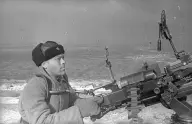
Crimea, December 1941: the Soviet amphibious gamble
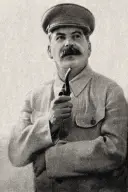
How far to press the advantage?
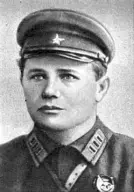
Toropets: How Far to Push the Breakthrough in the Snow?
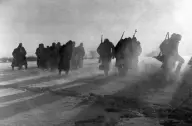
Snow Before Moscow — Zhukov and the Counter-Offensive
Volkhov Front: The Thrust Toward Lyuban
Rommel's Forbidden Gamble in Cyrenaica
Foreign Tanks in the Moscow Snow
Crimea, December 1941: Manstein's dilemma
Crusader: The Generals' Doubt
Guderian before Tula, October 1941
Crimea, December 1941: the Soviet amphibious gamble
How far to press the advantage?
Toropets: How Far to Push the Breakthrough in the Snow?
Snow Before Moscow — Zhukov and the Counter-Offensive
Volkhov Front: The Thrust Toward Lyuban
Rommel's Forbidden Gamble in Cyrenaica
Foreign Tanks in the Moscow Snow
Crimea, December 1941: Manstein's dilemma
Crusader: The Generals' Doubt
Guderian before Tula, October 1941
T10-082