
Foreign Tanks in the Moscow Snow
In the dead of winter, a tank officer of the receives equipment he has never handled: British and Valentine tanks, shipped in by the Arctic convoys under . His crews, thinned by the terrible losses of the summer and autumn of 1941, know the T-34 and the light T-60, not these machines from another arsenal, with manuals translated in haste.
The British equipment baffles them. The Matilda's armour matches that of the heavy KV-1, but its 2-pounder gun, lacking high-explosive rounds, bites little into infantry. The tracks slip on the ice; snow and mud pile up behind the side skirts and jam the suspension. Several tanks break down during the very first training drives, just as the Soviets' own tank stock has been spent in the fighting.
With the counter-attacking to push the Wehrmacht far from the capital, the officer must decide how to use them: throw these poorly known tanks straight into the front line despite the risk; keep them in reserve long enough to train the crews and adapt the tracks; or spread them out, in small packets, as a supplement among the T-34 and T-60 units.
Moscow region, January 1942, Soviet tank officer: how should the freshly unloaded Allied tanks be used?
The British tanks were committed without delay from the winter of 1941-42, for want of available Soviet armour. The first battalions trained on the Matilda and Valentine — including the — fought from late November 1941 in the defence and then the counter-offensive at Moscow. On the ice, the tracks slipped so badly that the Soviets welded steel spurs onto them; the thick armour gave good protection, but the 2-pounder gun, with no high-explosive shell, stayed weak against infantry, and the gearboxes jammed. The contribution was real — Allied tanks made up a notable share of the medium and heavy armour before Moscow in December 1941, at a moment when the Soviet stock was at its lowest — but criticised by the crews. British filled a decisive gap until Soviet industry recovered.
Learn more about this event
Related polls
10
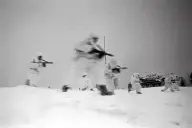
Konev and the Rzhev Salient
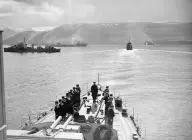
The Route of the Worst Journey in the World
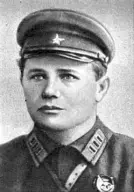
Toropets: How Far to Push the Breakthrough in the Snow?
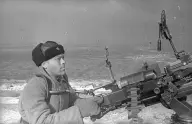
Crimea, February 1942: the Kerch bridgehead
Crimea, December 1941: Manstein's dilemma
Crimea, December 1941: the Soviet amphibious gamble
Demyansk: hold the pocket or break out?
Demyansk: Supply the Pocket From the Air?
Dunkirk: a British gunner facing his own guns
Snow Before Moscow — Zhukov and the Counter-Offensive
Konev and the Rzhev Salient
The Route of the Worst Journey in the World
Toropets: How Far to Push the Breakthrough in the Snow?
Crimea, February 1942: the Kerch bridgehead
Crimea, December 1941: Manstein's dilemma
Crimea, December 1941: the Soviet amphibious gamble
Demyansk: hold the pocket or break out?
Demyansk: Supply the Pocket From the Air?
Dunkirk: a British gunner facing his own guns
Snow Before Moscow — Zhukov and the Counter-Offensive
T10-090