
Rommel's Forbidden Gamble in Cyrenaica
General receives a providential convoy in January 1942: 55 tanks, thousands of tons of fuel and ammunition unloaded at Tripoli restore the offensive capacity he thought lost for weeks. Ahead of him, the Eighth Army staggers out of Operation Crusader in exhaustion; its armoured brigades, scattered across more than 300 miles, struggle to resupply, and its generals, convinced that the is neutralised for the foreseeable future, let their guard down. Rommel senses the window closing as the enemy begins to consolidate.
Yet Berlin and Rome have spoken: OKW and Comando Supremo order him to hold defensively at , wait for better weather and reinforcements. His direct superiors, General Bastico and Field Marshal , share that caution. Striking without authorisation risks a court-martial and, should the attack fail, a military disaster with no safety net. Waiting for more substantial reinforcements would mean a better-prepared offensive, but it hands the enemy the time to recover and turn a fragile forward screen into a solid front.
3 courses lie open to Rommel: strike immediately, without informing the high command, betting everything on total surprise and British disorganisation; obey orders and stay on the defensive at until Rome and Berlin give the green light; or hold off, gather stronger reserves first before risking his rebuilt force. Every hour that passes shifts the balance of power in the desert.
Cyrenaica, 21 January 1942, commanding Panzerarmee Afrika: how to act with a stretched Eighth Army ahead and the high command forbidding any attack?
Rommel attacks on 21 January 1942 without warning his superiors. The surprise is total: in less than 2 weeks he retakes and reconquers all of up to the line, inflicting heavy casualties on the British and capturing thousands of prisoners. The audacious stroke relaunches the desert war, cements Rommel's legend, and opens the road that will carry him, five months later, to and then to the gates of El Alamein.
Learn more about this event
Related polls
10
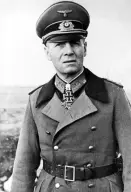
Crusader: Decision Time for Rommel
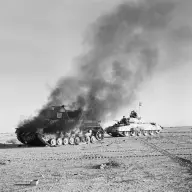
Crusader: The Generals' Doubt
Graziani enters Egypt — Sidi Barrani
The Mud, the Winter and the Road to Moscow
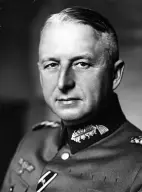
Perekop: the Iron Gate of Crimea
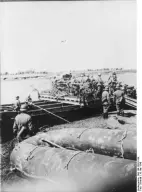
The Houx weir
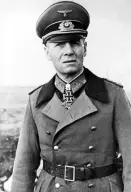
Rommel's 7th Panzer Through the Breach
Fall Gelb — the order of 9 May 20:00
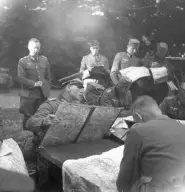
The crossing of the Meuse at Dinant
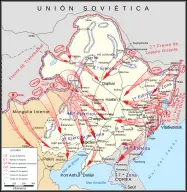
Khalkhin Gol — the August Dilemma
Crusader: Decision Time for Rommel
Crusader: The Generals' Doubt
Graziani enters Egypt — Sidi Barrani
The Mud, the Winter and the Road to Moscow
Perekop: the Iron Gate of Crimea
The Houx weir
Rommel's 7th Panzer Through the Breach
Fall Gelb — the order of 9 May 20:00
The crossing of the Meuse at Dinant
Khalkhin Gol — the August Dilemma
T10-027