
Graziani enters Egypt — Sidi Barrani
Marshal commands in Libya the , several 100,000 strong, facing far smaller British forces in Egypt. Mussolini, eager for an African victory to display while Germany goes after England, presses Graziani to invade Egypt and march on the Suez Canal. The stakes are enormous: the canal is the vital artery linking Britain to her Asian empire and oil supplies.
Graziani himself knows his weaknesses: his divisions lack trucks, modern armor and the logistics to cross the desert. On September 9, he finally launches the offensive. The Italians push back the British covering detachments, retake Fort Capuzzo, cross the border and advance along the coast.
On September 16, they reach Sidi Barrani, about 100 kilometers inside Egypt. Ahead of them, the main British positions at Mersa Matruh are still more than 130 km away. Graziani must decide: push on toward Mersa Matruh while the British fall back, or halt at Sidi Barrani to consolidate his logistics before resuming the advance.
Should Graziani push deeper into Egypt or consolidate his gains?
Graziani chooses to halt at Sidi Barrani and build fortified camps while awaiting supplies: he halts at Sidi Barrani and builds a series of fortified camps, waiting for roads and supplies before any resumption. The Italian advance freezes for months. The respite gives the British commander in the Middle East, , time to prepare a counter-offensive. In December 1940, Operation Compass will sweep away these camps and hurl the Italians far back into Libya, taking tens of thousands of prisoners. The cautious September halt, meant to secure the offensive, will in fact have doomed it: the has frozen within reach of an enemy it believed in flight. Graziani, disavowed, will give up his command in early 1941.
Learn more about this event
Related polls
10
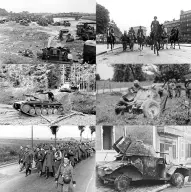
Fall Gelb — the order of 9 May 20:00
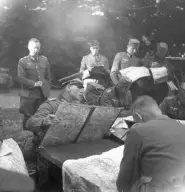
The crossing of the Meuse at Dinant
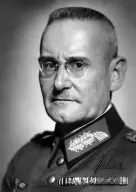
Which heart to strike in the East?
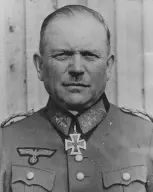
Sedan — Guderian on the Meuse
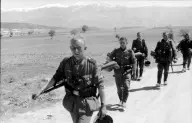
Marita — the invasion of Greece
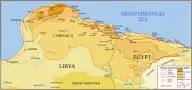
O'Connor launches Compass — Sidi Barrani
Göring at Cap Gris-Nez — September 7
Crusader: Decision Time for Rommel
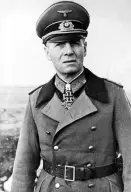
Hitler sends Rommel to Africa
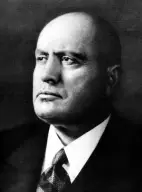
Mussolini and the Greek plan — Rome, 15 October 1940
Fall Gelb — the order of 9 May 20:00
The crossing of the Meuse at Dinant
Which heart to strike in the East?
Sedan — Guderian on the Meuse
Marita — the invasion of Greece
O'Connor launches Compass — Sidi Barrani
Göring at Cap Gris-Nez — September 7
Crusader: Decision Time for Rommel
Hitler sends Rommel to Africa
Mussolini and the Greek plan — Rome, 15 October 1940
T05-003