
Khalkhin Gol — the August Dilemma
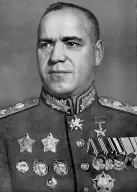
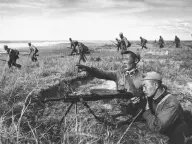
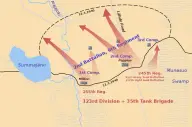
Since July, Zhukov has patiently massed a considerable combined-arms force on the Khalkhin Gol: hundreds of tanks and guns, a powerful air arm, supplies hauled over hundreds of kilometres of track. He has multiplied deceptions to persuade the Japanese that he was preparing to winter on the defensive.
By mid-August, his deployment is ready. But the political context is growing tense: in Moscow, secret negotiations are under way with Berlin, and a swift settlement of the Mongolian affair would serve Stalin's interests. Zhukov knows that his material superiority is momentary and that the element of surprise will not last.
The moment of decision has come. Launch a great encirclement offensive immediately to annihilate the in one stroke, gambling on surprise and mass, at the risk of a costly failure? Be content to push the adversary back methodically without seeking annihilation? Or wait still longer, to accumulate more resources, at the risk of losing the element of surprise? The decision will have repercussions far beyond the Mongolian steppe.
Khalkhin Gol, August 1939, you are Zhukov: should you launch the great encirclement offensive now?
Zhukov launched a great encirclement offensive to annihilate the Japanese army: on 20 August 1939, he launches a combined-arms pincer offensive that surprises the Japanese and closes a pocket around their forces. In about 10 days, the is crushed, at the cost of heavy losses on both sides. A ceasefire will come in mid-September. The victory at Khalkhin Gol, combined with the shock of the Nazi-Soviet pact, lastingly turns Japan away from a strategy of northward expansion against the USSR: Tokyo will turn towards the south and the Pacific. The battle also establishes Zhukov, future marshal and architect of the great Soviet victories. For the , this victory validates a combined-arms doctrine that will inspire its great later offensives.
Learn more about this event
Related polls
10
Khalkhin Gol — Baïn-Tsagan
Khalkhin Gol — the First Clash
Lähde — Yakovlev against the Mannerheim bolt
Timoshenko at Summa — 11 February
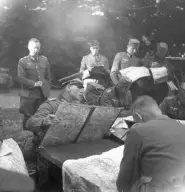
The Houx weir
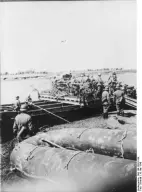
The crossing of the Meuse at Dinant
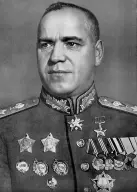
Zhukov Takes Command
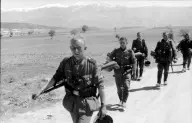
Marita — the invasion of Greece
Pintor in the Alps — 21 June
Rommel before the Meuse — Dinant, 13 May
Khalkhin Gol — Baïn-Tsagan
Khalkhin Gol — the First Clash
Lähde — Yakovlev against the Mannerheim bolt
Timoshenko at Summa — 11 February
The Houx weir
The crossing of the Meuse at Dinant
Zhukov Takes Command
Marita — the invasion of Greece
Pintor in the Alps — 21 June
Rommel before the Meuse — Dinant, 13 May
T00-040