
Golikov — what to tell Stalin about German troops
General has directed the GRU, Soviet military intelligence, since July 1940. He inherited the post after the dismissal of his predecessor , removed for having spoken to Stalin too frankly about the Red Army's lack of preparation. The implicit message was lost on no one in the apparatus.
In this spring of 1941, agents' reports pile up on his desk. They describe a concentration of German troops along the frontier, an attack on 3 axes, the names of commanders, a provisional opening date. The picture is coherent and alarming.
But Golikov also knows what Stalin believes. The master of the Kremlin holds the German-Soviet pact of 1939 to be solid and judges it inconceivable that Hitler would open a second front before finishing with England. The British, in his eyes, have but one aim: to sow discord between Moscow and Berlin. Berlin, for its part, has launched a vast operation of deception to mask its preparations.
On 20 March, Golikov submits his report. There remains the conclusion: to write it as the facts demand, or as the powers that be demand.
Moscow, March 1941, Golikov heads Stalin's military intelligence: how to characterise the German troop build-up on the border?
Golikov concluded that the rumours were Anglo-American disinformation: his report faithfully described the German dispositions, then defused them. He wrote that the majority of the reports mentioning a war in spring 1941 came from 'Anglo-American sources whose aim, without any doubt, is to worsen relations between the USSR and Germany'. The most precise intelligence was thus filed under disinformation; Golikov instead forecast German operations against the United Kingdom, Gibraltar and the Near East. He told Stalin exactly what he wanted to hear. On 22 June, the invasion would sweep away this fiction. As for Proskurov, his predecessor, he would be shot on 28 October 1941 for having 'failed' to anticipate the very attack he had precisely foretold.
Learn more about this event
Related polls
10
Canaris and the Order to Take Gibraltar
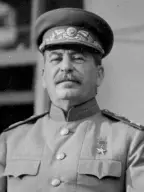
Stalin and the warnings of spring 1941
Schellenberg at Venlo — Cafe Backus, 4:00 p.m.
Believing the First Reports of Mass Killings in the East?
Cape Matapan — Cunningham against Iachino
The Belgrade coup
Doussot — Special Brigade No. 1
Elser in Munich — Bürgerbräukeller, 9.20 p.m.
The Paris Barber and the Police Offer
Stalin and the Mass Surrenders
Canaris and the Order to Take Gibraltar
Stalin and the warnings of spring 1941
Schellenberg at Venlo — Cafe Backus, 4:00 p.m.
Believing the First Reports of Mass Killings in the East?
Cape Matapan — Cunningham against Iachino
The Belgrade coup
Doussot — Special Brigade No. 1
Elser in Munich — Bürgerbräukeller, 9.20 p.m.
The Paris Barber and the Police Offer
Stalin and the Mass Surrenders
T07-030