
The Grebbeberg
The main defence of the Netherlands rested on the Grebbe line, which barred access to the heart of the country. Its key point was the Grebbeberg, a height near Rhenen — one of the few elevations in a flat country — which the Germans attacked from 11 May to break through towards "Fortress Holland".
The Dutch defenders, less well armed and without sufficient armoured or air support, had to decide on their conduct. To hold the position whatever the cost, to preserve the integrity of the line and gain time. To conduct a flexible defence by falling back on the water line (the "Waterlinie") to the rear. Or to counter-attack to retake the lost ground.
The command could hold the Grebbeberg firmly, withdraw in good order to the line of defensive inundations, or counter-attack to restore the situation. The aim was to delay the enemy long enough for the flooded defence of the heart of the country to play its part — and for the Allies, perhaps, to intervene.
In command of the Dutch defence at the Grebbeberg, 11 May 1940, under German assault: how to defend the country's gateway?
The Dutch held the Grebbeberg firmly: from 11 to 13 May, at the Grebbeberg, they fought the main land battle of the defence of the Netherlands, with fierce but poorly supported counter-attacks. Overwhelmed by German firepower and air support, they finally yielded the position on 13 May, which opened the way to the heart of the country and precipitated, together with the bombing of Rotterdam, the capitulation. The Grebbeberg, where many Dutch soldiers now rest, remains the symbol of the resistance — courageous but desperate — of a small army against the German steamroller.
Learn more about this event
Related polls
10
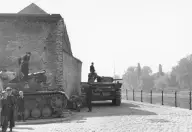
Maastricht — Govers facing the armour at 04:35

Chasseurs Ardennais — the Delaying Mission
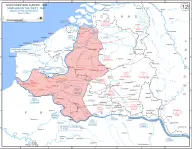
Belgian army at its limit: hold the Lys or pull back?
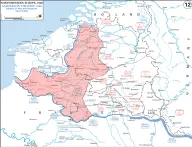
Boulogne — Fox-Pitt and the Guards facing the port
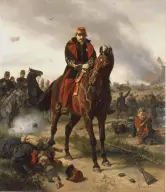
Bulson — Lafontaine and the 02:00 rumour
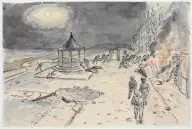
The Defence of Boulogne
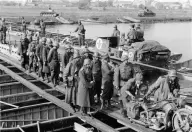
The bridges of the Meuse
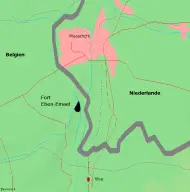
Eben-Emael — Jottrand under the explosions
Monthermé — Portzert in the Meuse loop
Tank Alarm at Bulson
Maastricht — Govers facing the armour at 04:35
Chasseurs Ardennais — the Delaying Mission
Belgian army at its limit: hold the Lys or pull back?
Boulogne — Fox-Pitt and the Guards facing the port
Bulson — Lafontaine and the 02:00 rumour
The Defence of Boulogne
The bridges of the Meuse
Eben-Emael — Jottrand under the explosions
Monthermé — Portzert in the Meuse loop
Tank Alarm at Bulson
T03-106