Lord Gort and the Collapsing Front
On 25 May 1940, the commander-in-chief of the British Expeditionary Force, Lord , faces the gravest decision of his career. The Allied front is collapsing, the Germans have reached the Channel, and the Allied plan still calls for a counter-attack towards the south to re-establish the junction with the bulk of the French forces.
, for his part, judges the situation hopeless: he believes that the only chance of saving his army is to abandon the offensive towards the south and to fall back on Dunkirk to evacuate by sea. But that means abandoning his French allies, going against orders for inter-Allied coordination, and acknowledging defeat on the continent.
may carry out the planned counter-attack towards the south, in accordance with the Allied plan, despite his scepticism. He may decide, on his own authority, on the withdrawal to Dunkirk with a view to evacuation. Or he may play for time, awaiting clear instructions from London. On this choice depends the survival of almost the entire British army.
Lord Gort, 25 May 1940, the Allied front collapsed and a counter-attack plan still standing: carry out the attack or withdraw?
ordered the withdrawal to Dunkirk on his own authority: on 25 May, on his own initiative, he abandons the counter-attack towards the south and redeploys his divisions to cover the withdrawal to Dunkirk, anticipating the evacuation. London approves and triggers Operation Dynamo on 26 May. The decision, taken against the inter-Allied plan and at the cost of tensions with the French, makes it possible to save the essential part of the Expeditionary Force — nearly 338,000 men evacuated in all. Variously judged (the French would see it as an abandonment), it preserves the British army and, with it, the United Kingdom's capacity to continue the war. It is one of the most consequential decisions of 1940.
Learn more about this event
Related polls
10
The French navy disperses
Dunkirk: should the French be saved alongside the British?
The Capitulation of 28 May
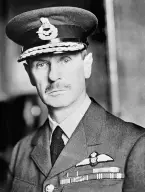
Dowding and the fighters
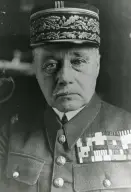
Gamelin at Vincennes — a Doctrine to Choose
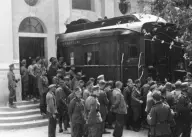
Reynaud or Pétain — Carry On or the Armistice
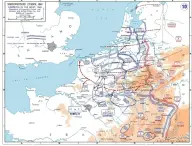
Belgium 1940: how far forward to push the Allied line?
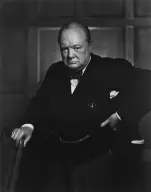
The War Cabinet — Negotiate or Carry On
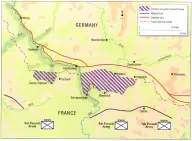
The Saar Offensive — Gamelin at Vincennes
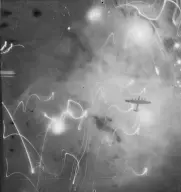
First Bombs on London — 25 August 1940
The French navy disperses
Dunkirk: should the French be saved alongside the British?
The Capitulation of 28 May
Dowding and the fighters
Gamelin at Vincennes — a Doctrine to Choose
Reynaud or Pétain — Carry On or the Armistice
Belgium 1940: how far forward to push the Allied line?
The War Cabinet — Negotiate or Carry On
The Saar Offensive — Gamelin at Vincennes
First Bombs on London — 25 August 1940
T03-150