
ORP Orzeł — Grudziński and the threat of internment
The ORP Orzeł ("Eagle") is one of the 2 most modern submarines in the Polish Navy, built in the Netherlands and commissioned in February 1939 — 1,100 tons, 12 torpedo tubes, a range of 7,000 nautical miles. When war breaks out, she is patrolling the Baltic under the command of Lieutenant Commander .
On 4 September, Kłoczkowski falls ill — perhaps malingering; the debate is unsettled. On 14 September, he steers for Tallinn (Estonia, neutral) to be put ashore at the hospital. The Orzeł enters Tallinn harbour at night. Under international law, a belligerent may call at a neutral port for 24 hours. But on the morning of 15 September, the Estonian authorities — under German diplomatic pressure — decide to intern the vessel: disarmament has begun, the charts are removed, cables are made fast to the hull.
The second-in-command, , 32, takes effective command. He knows 2 things: Warsaw will fall within days; and if the Orzeł stays in Tallinn, she will be seized by either the Soviets (who will impose a protectorate on Estonia a few weeks later) or the Germans. The crew has no charts for the Baltic or for the Sound.
Tallinn, 17 September 1939, you command the Polish submarine Orzeł, interned in Estonia: what to do that evening?
Grudziński attempts an immediate breakout, without charts and without full resupply. On the night of 17-18 September 1939, the crew overpowers the Estonian sentries (2 hostages are taken along and later landed safe in Sweden), casts off the moorings, and the Orzeł slips out of Tallinn submerged. Without charts, Grudziński navigates the Baltic from memory and by sounding line, threads the Sound under the noses of the German and Danish defences, and reaches Rosyth (Scotland) on 14 October 1939 after 26 days at sea. The submarine joins the Royal Navy as a unit of the Free Polish Navy. On 8 April 1940, the Orzeł sinks the German transport Rio de Janeiro off Lillesand — the first warning sign of the invasion of Norway. The submarine is lost with all hands in the North Sea in May-June 1940, the cause never established (a mine is the likely explanation). Grudziński, ashore in Britain at that moment, does not die with her — he serves on in London until his death from illness in July 1940.
Learn more about this event
Related polls
10

Borakowski and the merchant fleet
Hel — Unrug faces the German envoy
HMS Courageous — Makeig-Jones after the Torpedoes
ORP Wilk — Running the Danish Straits
Operation Peking — Stankiewicz Facing the Sound
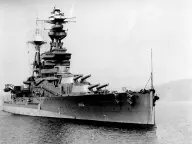
Royal Oak — Prien in Scapa Flow
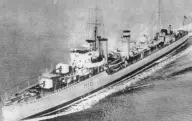
HMS Daring in the Pentland Firth
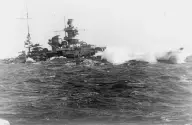
HMS Rawalpindi — Kennedy at 3:47 p.m.
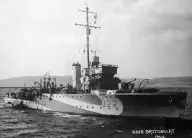
HMS Sphinx at Kinnaird Head
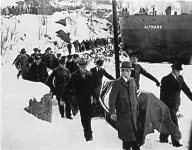
Vian in the Jøssingfjord
Borakowski and the merchant fleet
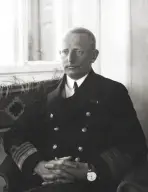
Hel — Unrug faces the German envoy
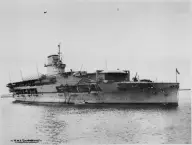
HMS Courageous — Makeig-Jones after the Torpedoes
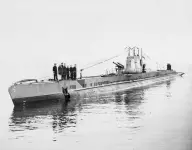
ORP Wilk — Running the Danish Straits
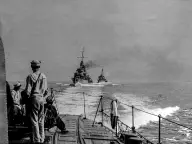
Operation Peking — Stankiewicz Facing the Sound
Royal Oak — Prien in Scapa Flow
HMS Daring in the Pentland Firth
HMS Rawalpindi — Kennedy at 3:47 p.m.
HMS Sphinx at Kinnaird Head
Vian in the Jøssingfjord
T01-005