
In early 1939, Hitler approved Plan Z: a colossal naval construction programme intended to provide Germany, by the mid-1940s, with a high-seas fleet capable of challenging the Royal Navy — giant battleships, battlecruisers, aircraft carriers. It is the dream of a prestige navy, on a world scale.
But in the summer of 1939, war appears imminent — well before this fleet can exist. Grand Admiral must confront a contradiction: Plan Z absorbs steel, shipyards and manpower, but its ships will not be ready in time.
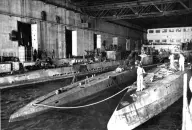
Another path exists, championed by Rear Admiral Dönitz: to give up the great surface ships and invest massively in submarines, a cheap and formidable weapon for strangling British commerce. Raeder must decide. To pursue Plan Z and its prestige battleships? To redirect the effort urgently towards a fleet of submarines in great numbers? Or to attempt a compromise which, for lack of means, risks delivering neither one nor the other in time?
Berlin, July 1939, you are Raeder at the Kriegsmarine: prestige battleships or a submarine fleet?
The Kriegsmarine maintains orientation A until the outbreak of war: priority remains with the great surface ships of Plan Z, to the detriment of the large-scale submarine programme that Dönitz demanded. The result: in September 1939, Germany fields only about 50 submarines, of which only a fraction are fit for the Atlantic — far short of the hundreds judged necessary to strangle the United Kingdom. Plan Z is abandoned at once, the war having come too soon. This poor alignment between ambition and timetable will deprive Germany, at the start of the conflict, of the weapon that could have been the most dangerous for it. Dönitz will have to wage his first campaigns with a handful of vessels, while awaiting an accelerated construction programme.
Learn more about this event
Related polls
10
The U-boats Before the Storm
Dönitz at Sengwarden — U-boats Held in Port
Raeder and the Seelöwe gamble
Weserübung — directive of 1 March
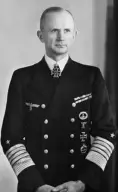
Dönitz and Operation Drumbeat
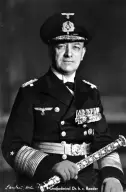
Send out the Bismarck alone, or wait for her sisters
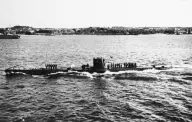
30 submarines a month, or next to nothing
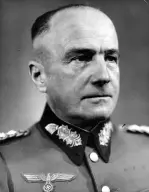
Brauchitsch — Reich Chancellery, 5 November

The Obersalzberg Speech
Strike America or hold the Atlantic?
The U-boats Before the Storm
Dönitz at Sengwarden — U-boats Held in Port
Raeder and the Seelöwe gamble
Weserübung — directive of 1 March
Dönitz and Operation Drumbeat
Send out the Bismarck alone, or wait for her sisters
30 submarines a month, or next to nothing
Brauchitsch — Reich Chancellery, 5 November
The Obersalzberg Speech
Strike America or hold the Atlantic?
T00-027