
A young Chinese man of is one of the tens of thousands of men ordered by loudspeakers and posters to report after the city falls on 15 February 1942. Like most of his neighbours in Chinatown, he has seen the columns of smoke, the looting and the arrival of Japanese troops; he knows the occupiers deeply distrust the Chinese community, which financed the war effort against Japan and supplied volunteers for the island's defence.
The new administration launches an operation it calls , the purge through elimination. The , the Japanese military police, sets up checkpoints across the city; elsewhere it is the that operates. All Chinese men of fighting age, 18 to 50, must pass a screening meant to expose former volunteers, communists, the educated, members of patriotic associations and the names on the lists of suspects. The sorting is done in haste, with no clear rule: a stamp on the arm, a word from a hooded informer, and a man is sent to one side or the other.
Summoned for dawn, he has a few hours to decide. He can report to the checkpoint hoping to pass for an ordinary man; hide or flee the city before facing the sorting; or destroy any incriminating papers and try to vanish into the anonymous mass of those summoned.
Singapore, February 1942, a young Chinese man summoned by the Kempeitai: how to get through the screening alive?
The vast majority of men obeyed the summons and reported to the screening centres, having no credible alternative under occupation. The sorting there was arbitrary: a stamp on the skin or clothing meant a pass, while those who raised the slightest suspicion — tattoos, calloused hands, an intellectual's spectacles, or simply being pointed out by a hooded informer — were loaded onto trucks bound for remote beaches such as Punggol, Changi or Sentosa, then machine-gunned and their bodies thrown into the sea. Carried out from 18 February to early March 1942, Operation claimed from several thousand to several tens of thousands of Chinese victims: Japanese figures put the toll at about 5,000 dead, Chinese estimates at up to nearly 50,000. After the war, two officers were sentenced to death and others imprisoned; the massacre remains a central wound in 's memory.
Learn more about this event
Related polls
10
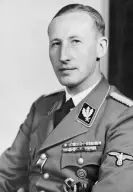
The Wannsee Villa: Aligning the Ministries
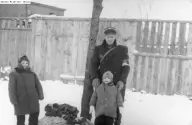
Chełmno: What to Do With What You Have Seen?
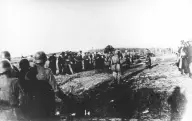
The Ninth Fort, Kaunas, October 1941
The Reprisal Quota at Kragujevac
The Captives of the Ukrainian Pockets
Singapore, 1942: The Army of Prisoners
AB Aktion — planning at the Wawel
Beria — the NKVD ordinance of 19 September
The Obersalzberg Speech
Hitler Before the Reichstag, 30 January 1939
The Wannsee Villa: Aligning the Ministries
Chełmno: What to Do With What You Have Seen?
The Ninth Fort, Kaunas, October 1941
The Reprisal Quota at Kragujevac
The Captives of the Ukrainian Pockets
Singapore, 1942: The Army of Prisoners
AB Aktion — planning at the Wawel
Beria — the NKVD ordinance of 19 September
The Obersalzberg Speech
Hitler Before the Reichstag, 30 January 1939
T10-072