
The Ice Road on Lake Ladoga
has governed a city cut off from the world since September. Land supply routes have been severed; the flotilla is locked in ice; the daily bread ration has just fallen to 125 grams for a factory worker, 75 for a child. Each week, thousands of Leningraders are dying of starvation in frozen apartments, and internal figures show the warehouses emptying at a terrifying pace.
Only 1 opening remains: Lake . Now frozen, it theoretically offers a usable surface between the eastern shore — connected to the Soviet rail network — and the besieged city. But the ice, barely a few centimetres thick in places, keeps cracking under the trucks; vehicles are already sinking, taking drivers and loads with them. German aircraft and artillery pound the route relentlessly.
Zhdanov must choose between 3 courses of action with radically different consequences: launch massive truck convoys across the ice immediately to supply the city and evacuate civilians, accepting heavy losses from the outset; impose even harsher rationing and wait until the ice reaches a depth considered safe enough for convoys; or concentrate available forces on a military breakthrough to break the encirclement overland and reopen a land corridor.
Leningrad, 10 December 1941, the man responsible for the defence of the encircled city: how can Andrei Zhdanov still feed 2 million inhabitants on the brink of annihilation?
Zhdanov bets on the — Doroga Zhizni — and orders the convoys out immediately. Despite treacherous ice and relentless bombardment, the trucks begin delivering food, ammunition, and fuel to while evacuating hundreds of thousands of civilians eastward, children first. The route becomes the lifeline of the besieged city, operating throughout the winter at considerable human and material cost. The siege will last nearly 900 days, until January 1944.
Learn more about this event
Related polls
10
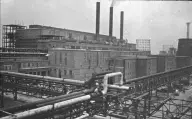
The Monowitz Construction Site
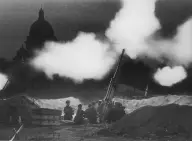
Leningrad encircled: where to keep the bread?
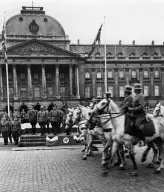
Jobless worker: take work from the occupier?
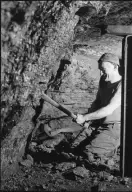
British Coal for the Winter of 1939
Campine Coal and the Hunger of Year One
The Tizard Mission's Trunk for America
The Minister, the Fleet and the Empty Plates
The Upper Silesian Pole Subjected to Forced Labour
The Fourth Buna — Where to Site the Plant
British rationing put to the test in 1941
The Monowitz Construction Site
Leningrad encircled: where to keep the bread?
Jobless worker: take work from the occupier?
British Coal for the Winter of 1939
Campine Coal and the Hunger of Year One
The Tizard Mission's Trunk for America
The Minister, the Fleet and the Empty Plates
The Upper Silesian Pole Subjected to Forced Labour
The Fourth Buna — Where to Site the Plant
British rationing put to the test in 1941
T10-032