
Wieluń, Dawn of 1 September 1939
On the eve of 1 September 1939, the Stukas of wait on the airfield of Nieder-Ellguth, a few minutes' flight from the Polish border. Wieluń, a small town on the other side, has neither a garrison nor any anti-aircraft defense: its only installations are a hospital, some mills, a brewery, and a modest sugar refinery on the outskirts.
The early-morning reconnaissance flights report Polish units about a dozen kilometers to the southwest — not in the town. The air commander must set the objective for the first waves, knowing that Luftwaffe doctrine also seeks to test dive-bombing against a real target.
Strike the town with no confirmed military objective, target the troops spotted outside the built-up area, or postpone the attack: the decision is made in the very first minutes of the war.
Poland, dawn of 1 September 1939: what order does the German air commander give his Stukas over this border town?
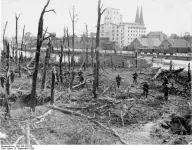
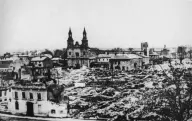
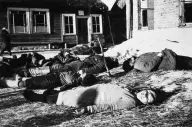
Richthofen launched the attack on the town itself. From around 4:40 a.m. — even before the first shots were fired on the Westerplatte — 's Stukas dropped their bombs on Wieluń, which was devoid of any defense. In 9 hours, some 380 bombs (about 46,000 kg) destroyed 70% of the town (up to 90% in the center), struck the hospital marked with the Red Cross, and killed more than 1,200 civilians. Sigel reported having made "no notable observation of the enemy." Historians (, ) see in the choice of this undefended border target a trial of dive-bombing; the attack, carried out without a declaration of war, is regarded as one of the first war crimes of the conflict. 2 attempts at prosecution in West Germany (1978, 1983) were dismissed.
Learn more about this event
Related polls
10
Eben-Emael — the Fortress Deemed Impregnable
Beria — the NKVD ordinance of 19 September
Gleiwitz — Naujocks at the Transmitter
Heydrich — the Conference of 21 September
A Danzig Customs Officer on the Day of Annexation
Wieluń at 04:40 — the first air strike
AB Aktion — planning at the Wawel
Forster — Kashubians and Kociewiacy
The Reich and the Resources of the Conquered East
Greiser — the Priority of the Wartheland
Eben-Emael — the Fortress Deemed Impregnable
Beria — the NKVD ordinance of 19 September
Gleiwitz — Naujocks at the Transmitter
Heydrich — the Conference of 21 September
A Danzig Customs Officer on the Day of Annexation
Wieluń at 04:40 — the first air strike
AB Aktion — planning at the Wawel
Forster — Kashubians and Kociewiacy
The Reich and the Resources of the Conquered East
Greiser — the Priority of the Wartheland
T01-110