Axis & Allies (Classic)
Anecdote
Born in the mind of Larry Harris and published by Nova Game Designs, then by Milton Bradley in its iconic 1984 edition, Axis & Allies invented the planisphere strategic board wargame formula for the mass market. The player represents one of the five great powers — Germany, Japan, the United States, the United Kingdom, the USSR — and simultaneously manages production, troop movements and major battles resolved with dice. The scale is deliberately vast: one turn represents several months, a single infantry figure stands for an entire army, and the map covers the whole globe. A full game takes four to six hours, which made it the subject of memorable evenings for an entire generation of American and European players. The learning curve remains gentle thanks to clear rules, but the game conceals genuine geopolitical depth where each national economy must be managed carefully. Harris wanted to offer a simulation that was both readable and educational, faithful to the great turning points of the war without overwhelming the player with chronology. The box with its hundreds of coloured plastic figurines immediately became an icon, almost a pop-culture object. The title spawned an enormous family: Europe, Pacific, D-Day, Battle of the Bulge, Guadalcanal, and successive revisions up to the 1942 edition and then Global 1940. Its influence is fundamentally twofold, on both mass-market wargames and modern strategy games, setting a standard that every competitor has had to measure up against. A very organised community, centred notably on the Axis & Allies League, produces competitions, house rules and balanced variants. The title also popularised the concept of combat resolved with simultaneous batches of dice, with priority order determined by unit type. Translated into French on several occasions, it still serves today as an introduction to grand strategy for many teenagers and history students. In the panorama of WWII games, it is the ludic equivalent of Monopoly for its cultural universality.
Popularity & reception
Awards — Charles S. Roberts Award - Best Initial Release of a Pre-WWII to WWII Boardgame (1984) · Origins Award - Adventure Game of the Year (1984) · Games Magazine Hall of Fame
Learn more about this game
Related games
10
▾
A World at War
World in Flames
Triumph & Tragedy: European Balance of Power 1936-1945
Advanced Squad Leader (ASL)
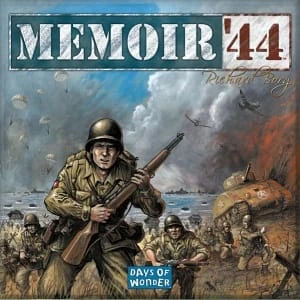
Memoir '44
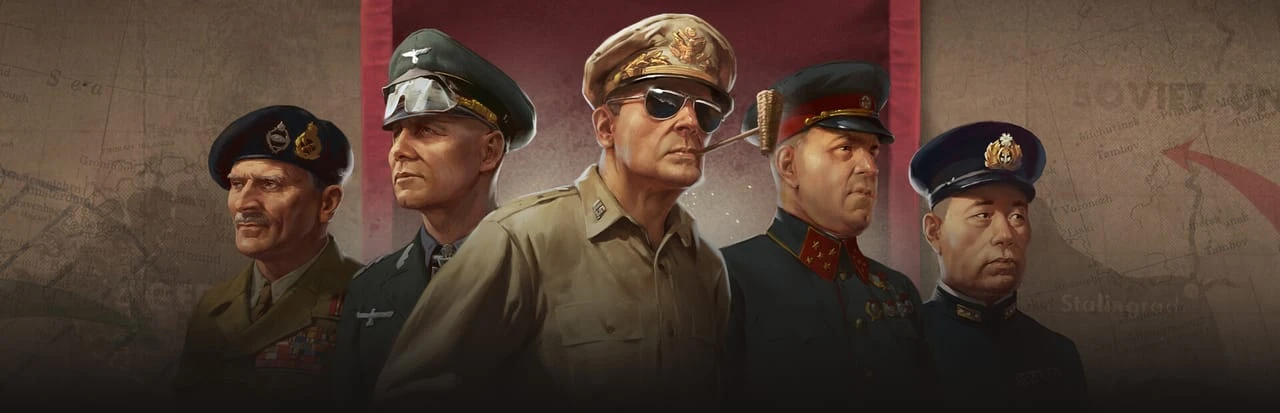
Hearts of Iron IV
Combat Commander: Europe
World Conqueror 4 — WW2 Strategy
Empire of the Sun
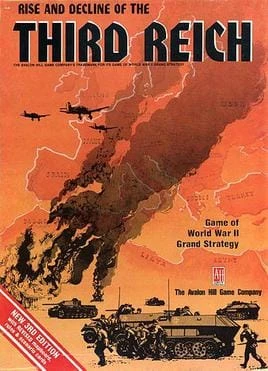
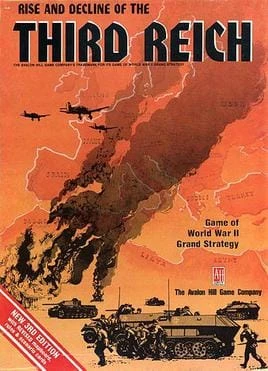
Rise and Decline of the Third Reich
A World at War
World in Flames
Triumph & Tragedy: European Balance of Power 1936-1945
Advanced Squad Leader (ASL)
Memoir '44
Hearts of Iron IV
Combat Commander: Europe
World Conqueror 4 — WW2 Strategy
Empire of the Sun