
has commanded the from Scapa Flow, in the Orkneys, for over a year. A seasoned naval officer, he carries the responsibility of protecting the Arctic convoys that carry war materiel to Murmansk for the Soviet Union. Convoy PQ-12, sailing from Iceland, is making its way north through a heavy sea and still-long nights.
For months Tovey has feared one precise threat: the German battleship , one of the most powerful capital ships in the world, lying in a fjord near Trondheim. So long as she stays at anchor, she alone ties down a share of the British heavy forces, which must remain ready to intercept her. Codebreaking and aerial reconnaissance alert the Admiralty: the has put to sea, escorted by destroyers, to fall upon PQ-12 and its returning convoy. Tovey, already at sea with the battleship and the carrier , has only a few hours to react.
He can throw the bulk of the into pursuit of the to try to sink her in a pitched battle; settle for covering PQ-12 from a distance and routing it well clear of the battleship; or send the torpedo bombers of the to hunt the German giant before she reaches the convoy.
Norwegian Sea, March 1942, John Tovey leading the Home Fleet: how to answer the Tirpitz sortie against Arctic convoy PQ-12?
Tovey launched the in pursuit and did try to bring the to action. The two squadrons manoeuvred for two days without sighting one another, twice passing within about 60 miles. On 9 March, located by reconnaissance, the was attacked by 12 Albacore torpedo bombers flown off the : not a single torpedo struck, and the battleship dodged clear and returned unharmed to her Norwegian waters. PQ-12 reached Murmansk on 12 March with no losses to enemy action, the having missed its target. The chance to destroy the ship was lost. Left intact, the remained a living threat that continued to tie down Allied heavy forces and would weigh heavily a few months later on the fate of convoy PQ-17.
Learn more about this event
Related polls
10

Shark: When the Atlantic Goes Dark
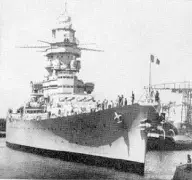
The Admiralty and the Strasbourg Rumour
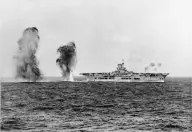
Cape Matapan — Cunningham against Iachino
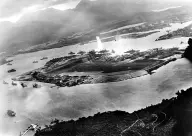
The Japanese Spy on the Eve of Pearl Harbor
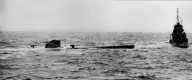
U-110 — a U-boat abandoned but afloat
A battleship sunk: tell or conceal?
Bruneval: The Secret of the Würzburg
Battleships Stuck in Port for Want of Fuel — Central Mediterranean
The Altmark affair
Bergen — the Skuas at extreme range
Shark: When the Atlantic Goes Dark
The Admiralty and the Strasbourg Rumour
Cape Matapan — Cunningham against Iachino
The Japanese Spy on the Eve of Pearl Harbor
U-110 — a U-boat abandoned but afloat
A battleship sunk: tell or conceal?
Bruneval: The Secret of the Würzburg
Battleships Stuck in Port for Want of Fuel — Central Mediterranean
The Altmark affair
Bergen — the Skuas at extreme range
T10-105