
Riga: Surviving in the Small Ghetto?
is a Jewish merchant from Riga, in his forties. Like thousands of others, he was confined in the autumn of 1941 to the ghetto set up in the Maskavas district, where the Germans and their Latvian auxiliaries penned the city's Jewish community.
On 30 November and 8 December 1941, the ghetto is emptied in two waves. Whole columns of women, children, and the elderly are marched on foot to the forest, a few kilometres to the south-east, and shot at the edge of pits dug in advance. Kaufmann was held back at the last moment among the able-bodied men the occupier keeps for forced labour. In the aftermath of the shootings, the survivors — a few thousand men employed in the work commandos, and a handful of women classed as seamstresses — are squeezed into a reduced sector, the small ghetto, separated by barbed wire from the part now reserved for Jews deported from the Reich. His wife and son are gone.
Kaufmann must decide how to endure in what remains of an annihilated world. He can cling to the work columns that leave the small ghetto each day, making his usefulness a reprieve; try to escape toward the surrounding forests to reach the partisans, at the risk of being handed over or shot; or seek, within the barbed wire itself, to build a clandestine network to organise and resist.
Riga, December 1941, a ghetto survivor confined to the small ghetto: how does one try to stay alive when almost all of one's people have just been murdered?
survived by clinging to the work columns, then to the camps, until liberation; after the war he set down his testimony in a book, "Churbn Lettland" ("The Destruction of the Jews of Latvia"), one of the first chronicles of the in the Baltic states. The massacres, carried out by the SS and German police with their Latvian auxiliaries, killed about 25,000 people in two days — nearly the entire , including close to 1,000 deported German Jews. Only a few thousand able-bodied men and a handful of women escaped death for a time in the small ghetto; most would later perish in the camps. Frida Michelson, who threw herself into the snow on the road to and hid beneath a heap of shoes, was one of the very few to survive the shooting itself.
Learn more about this event
Related polls
10
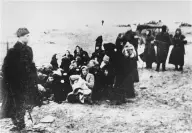
The Demobilised Latvian Soldier and the German Offer
Chełmno: What to Do With What You Have Seen?

Riga, July 1941: the SD Approaches Arajs
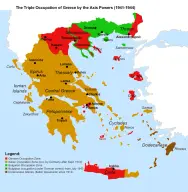
Athens, the Winter of Hunger
Berlin: An Order for "Evacuation to the East"
Blockade and Famine: A Gap for Greece?
Châteaubriant: The List of Hostages
Denouncing the partisans under the terror of reprisals in Serbia
Hilfswillige: Survival or Refusal in the Transit Camp
Warsaw Ghetto Teachers and the Ban
The Demobilised Latvian Soldier and the German Offer
Chełmno: What to Do With What You Have Seen?
Riga, July 1941: the SD Approaches Arajs
Athens, the Winter of Hunger
Berlin: An Order for "Evacuation to the East"
Blockade and Famine: A Gap for Greece?
Châteaubriant: The List of Hostages
Denouncing the partisans under the terror of reprisals in Serbia
Hilfswillige: Survival or Refusal in the Transit Camp
Warsaw Ghetto Teachers and the Ban
T10-065