
Berlin: An Order for "Evacuation to the East"
is 19 years old. Born in Berlin into a Jewish family of Russian origin, he has had to break off his graphic-arts studies and now works as a labourer in an arms factory, one of the forced jobs that still delay the summoning of the capital's last Jews. He wears the yellow star and lives under reduced ration cards and prohibitions that tighten month after month.
Since the autumn of 1941, the Reich authorities have been organising the departure of German Jews to the "East" by convoy. The first trains left Berlin in October for the Łódź ghetto, then for Riga and Minsk. The summons takes the form of an administrative letter: report to an assembly point, with a single small suitcase, for a "resettlement" presented as a labour transfer. No one in the community knows for certain what awaits at the end of the journey, but the few accounts that filter through are terrifying. Schönhaus's parents have already received the order to leave.
When the letter concerning him arrives, or when he realises it will, has only a few hours to decide. He can report to the assembly point as the summons demands, hoping the "resettlement" is real; stay in Berlin without papers, remove the star, and vanish into the city as a "U-boat" — the Jews who went into hiding in the very heart of the Reich; or try to reach the Swiss border, at the risk of being arrested on the way.
Berlin, January 1942, a young Jew summoned to report for "evacuation to the East": should he obey the order?
went underground in Berlin: he removed the star, took on false identities, and hid in the Moabit district. Drawing on his graphic-arts training, he became a forger for the resistance, producing identity cards that saved hundreds of hunted Jews. His parents, deported to occupied Poland, were murdered in 1942. Only in 1943, as the informer and the Gestapo tightened the net, did he flee to Switzerland by bicycle, carrying a forged Wehrmacht furlough pass. The reality of "evacuation to the East" was extermination: almost all of the Jews deported from Berlin were murdered at Łódź, Riga, Auschwitz, or in the killing centres. Of the 5,000 to 7,000 Jews who went into hiding in Berlin, only about 1,500 survived to the end of the war.
Learn more about this event
Related polls
10
Blockade and Famine: A Gap for Greece?
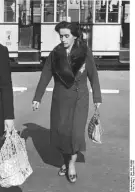
The Yellow Star in Berlin's Streets
The Deportation Order, Frankfurt, October 1941
Flee or Stay
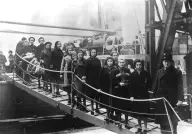
The Kindertransport
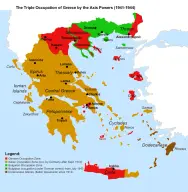
Athens, the Winter of Hunger
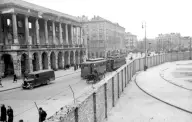
Barred from School in the Warsaw Ghetto
Hilfswillige: Survival or Refusal in the Transit Camp
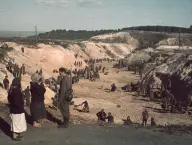
Kiev, 29 September 1941: The Posted Notice
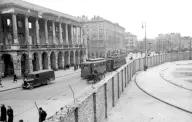
Warsaw Ghetto Teachers and the Ban
Blockade and Famine: A Gap for Greece?
The Yellow Star in Berlin's Streets
The Deportation Order, Frankfurt, October 1941
Flee or Stay
The Kindertransport
Athens, the Winter of Hunger
Barred from School in the Warsaw Ghetto
Hilfswillige: Survival or Refusal in the Transit Camp
Kiev, 29 September 1941: The Posted Notice
Warsaw Ghetto Teachers and the Ban
T10-064