
The Sittang Bridge: Blow It With the Division Behind?
("Jackie" Smyth) commands the in a disastrous retreat across Burma. A holder of the won in 1915, he is falling back with his exhausted brigades toward the , a broad river whose single railway bridge, roughly adapted for vehicles, opens the road to , the great port and key to the whole colony.
On 22 February the situation turns into a nightmare. The Japanese vanguard, faster than expected, infiltrates through the jungle and attacks the bridgehead on the west bank, where the demolition charges are laid. On the east bank, the bulk of the division is still trapped by traffic jams, bombing and confused fighting; the columns are stalled only a few kilometres from the sole crossing. If the Japanese seize the bridge intact, nothing stands between them and .
On the night of 22–23 February, Smyth must decide the unthinkable. He can order the bridge destroyed at once to bar the road to , sacrificing the two brigades left on the east bank; wait longer so that as many men as possible cross, at the risk that the enemy takes the bridge intact and pours toward the port; or attempt a partial or delayed demolition, hoping to gain a few hours without losing everything.
Sittang Bridge, February 1942, the major-general commanding the 17th Indian Division: must he destroy the only bridge before the Japanese reach it?
Smyth ordered the bridge destroyed, and it was blown at dawn on 23 February 1942 while most of the was still on the east bank. Cut off from the only crossing, the men tried to swim the or cross on improvised rafts under fire: many drowned, abandoned their weapons, or were captured. The division, some 17,000 strong, was reduced to about 3,500 infantry fit to fight. The road to lay open, the port fell in early March, and Smyth was relieved of his command.
Learn more about this event
Related polls
10
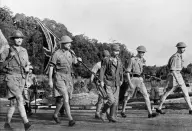
Percival and Yamashita's Ultimatum
Manila or Bataan?
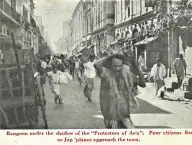
Rangoon on the Brink
Zhukov Facing the Void Before Moscow
Kirponos, Kiev and Stalin's Prohibition
Rostov: Withdraw or Obey the Führer
The Polish Army and the Deployment
"Cromwell" — England, 7 September 1940
Gamelin and French Army Doctrine
Gort at Habarcq — trust in the French plan
Percival and Yamashita's Ultimatum
Manila or Bataan?
Rangoon on the Brink
Zhukov Facing the Void Before Moscow
Kirponos, Kiev and Stalin's Prohibition
Rostov: Withdraw or Obey the Führer
The Polish Army and the Deployment
"Cromwell" — England, 7 September 1940
Gamelin and French Army Doctrine
Gort at Habarcq — trust in the French plan
T10-075