
British rationing put to the test in 1941
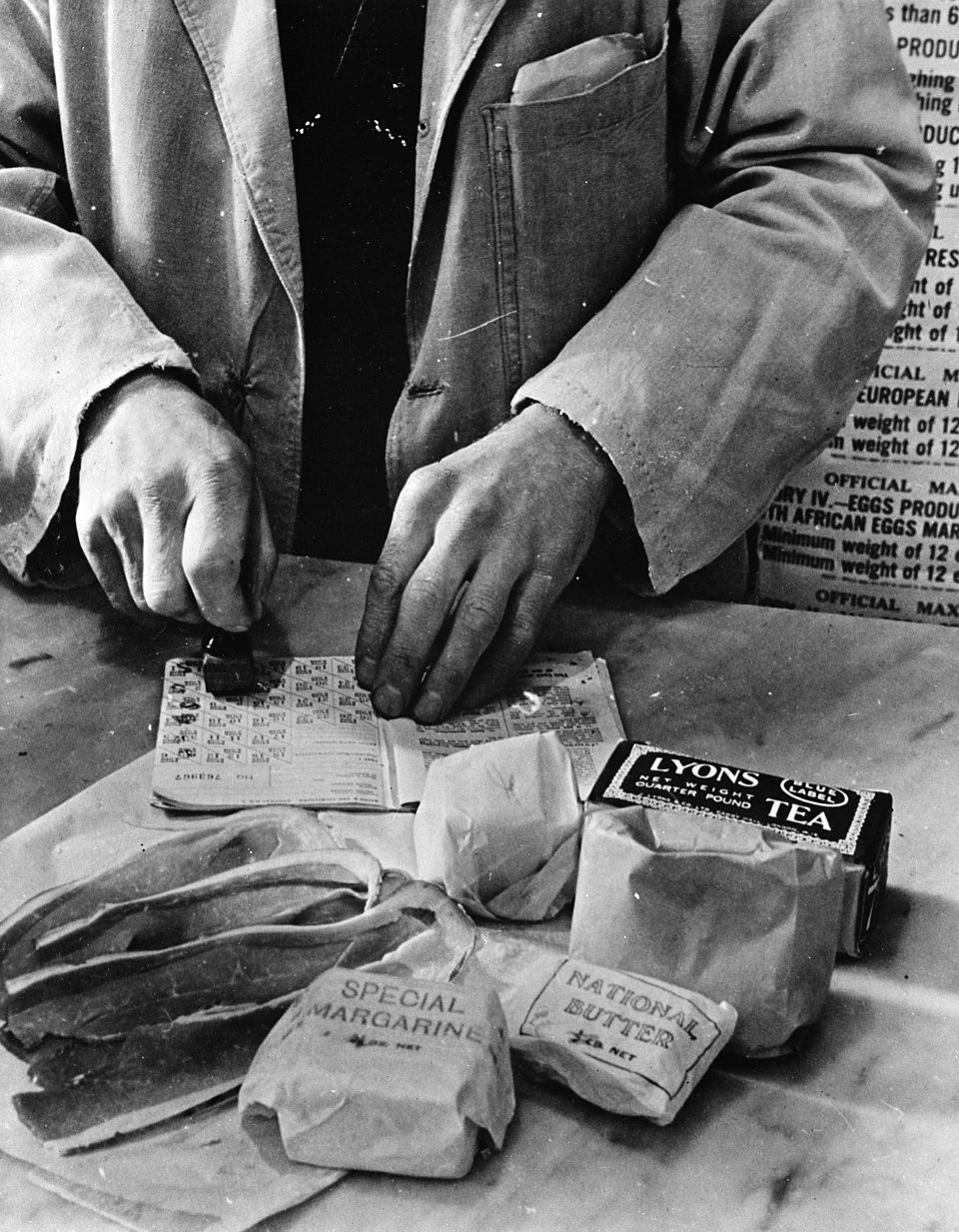
British food rationing began on 8 January 1940: bacon, butter, and sugar, then meat, tea, margarine, and fats. Lord Woolton — the businessman — did not create this system: appointed Minister of Food by Chamberlain in April 1940, he inherited a mechanism already in place that he had to extend and make acceptable.
1941 marked a turning point: the Atlantic submarine war was strangling imports. On 5 May 1941, cheese came under the coupon regime. In December, Woolton introduced the "points" system: each consumer was given a number of monthly points to spend freely on goods outside the basic ration (tinned food, biscuits, canned fruit), with the ministry adjusting the points value according to stocks. The challenge was also political and nutritional: to convince an entire people to accept scarcity over the long term, through posters, radio recipes, the "Woolton Pie," and the "National Loaf."
The overall line remained to be set. Should a strict arithmetical equality be applied to all? Hand out exemptions and special favours that would appease the discontented but wreck fairness? Or build a rationing system presented as "fair," coupled with targeted supplements for the most vulnerable — children, pregnant women, the sick — even at the cost of differentiating rations according to need?
What overall line should Lord Woolton impose for rationing in 1941?
Woolton built his policy on the principle of "fair shares": rationing presented as equitable, but coupled with targeted supplements for the most vulnerable. The Vitamin Welfare Scheme, launched in 1941, distributed cod liver oil, concentrated orange juice (supplied by American Lend-Lease), and milk to young children, pregnant women, and nursing mothers through clinics. Combined with the points system of December 1941 and intense public communication, this arrangement made British rationing remarkably well accepted. An unexpected effect: the health of British children improved on average during the war, taller and heavier than before 1939, even as the country lived under restrictions.
Learn more about this event
Related polls
10
British rationing — Morrison and the principle
The Upper Silesian Pole Subjected to Forced Labour
British Clothes Rationing
Campine Coal and the Hunger of Year One
The Minister, the Fleet and the Empty Plates
Cambridge, 1939: The Evacuated LSE Student and Conscription
The Channel Islands — open city?
British Coal for the Winter of 1939
The Tizard Mission's Trunk for America
Operation Pied Piper — Womersley and the evacuation
British rationing — Morrison and the principle
The Upper Silesian Pole Subjected to Forced Labour
British Clothes Rationing
Campine Coal and the Hunger of Year One
The Minister, the Fleet and the Empty Plates
Cambridge, 1939: The Evacuated LSE Student and Conscription
The Channel Islands — open city?
British Coal for the Winter of 1939
The Tizard Mission's Trunk for America