
November 1941. The Italian Empire in East Africa exists only on paper. Since the spring, British, South African, and Indian columns, along with the Ethiopian Patriots, have overrun the vast territories conquered five years earlier. Addis Ababa has fallen, the Negus Haile Selassie has regained his throne, and the great Italian garrisons have capitulated one after another. Only one pocket remains, clinging to the highlands of northwestern Ethiopia: the region of Gondar, commanded by General Guglielmo Nasi.
There, in a maze of mountain passes, forts, and peaks defended for months, Nasi holds on. His men—Italian soldiers and colonial askaris—have repelled assault after assault, inflicting heavy losses on attackers who are nevertheless far superior in numbers and matériel. But the noose is tightening. Supplies are running out, ammunition is counted round by round, enemy aircraft dominate the skies, and no resupply can cross the lines anymore. The fortress-villages that screened Gondar are falling one by one under the fire of the Patriots and Allied artillery.
The general knows that organized resistance is drawing to a close. Before him lie mountainous terrains well suited to dispersal, but his wounded are piling up and his starving columns will not hold out much longer. The hour of decision has come.
At the head of the last Italian pocket in East Africa, encircled and at the end of your resources, what do you decide?
Nasi led the defense of Gondar to the very limit, repelling the British and the Ethiopian Patriots for months. Short of supplies and ammunition, and after the fall of the last strongpoints, he capitulated on 27 November 1941, ending organized Italian resistance in East Africa. Tens of thousands of soldiers and askaris were taken prisoner. A few diehards refused to surrender and waged an isolated guerrilla campaign in the mountains until 1943. The tenacity of the defense of Gondar earned Nasi a reputation as a respected commander, even among his adversaries.
Learn more about this event
Related polls
10
The dash to the wire: Rommel's gamble on the frontier
Amba Alagi — the Duke of Aosta encircled
At the Gates of Moscow, in the November Frost
The Commissar Order
The Mud, the Winter and the Road to Moscow
Asmara: a second Keren or an open city?
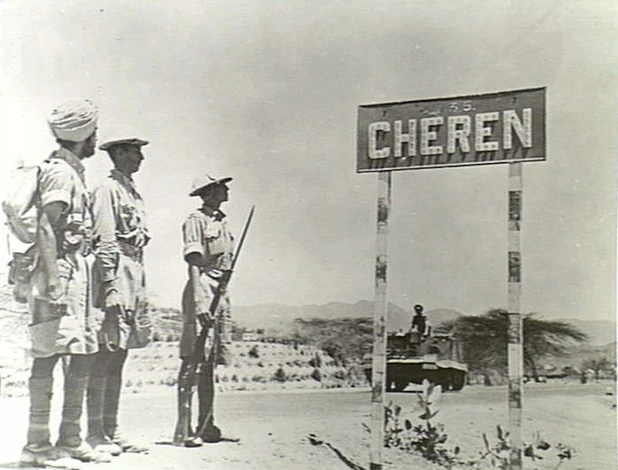
The Battle of Keren — Eritrea
Graziani enters Egypt — Sidi Barrani
Perekop: the Iron Gate of Crimea
Prestige or orders, at Kassala
The dash to the wire: Rommel's gamble on the frontier
Amba Alagi — the Duke of Aosta encircled
At the Gates of Moscow, in the November Frost
The Commissar Order
The Mud, the Winter and the Road to Moscow
Asmara: a second Keren or an open city?
The Battle of Keren — Eritrea
Graziani enters Egypt — Sidi Barrani
Perekop: the Iron Gate of Crimea