
Kiev or Moscow — Hitler decides
Two months after the start of Barbarossa, has taken Smolensk and is no more than some 350 km from Moscow. For the generals of the OKH — Halder, Bock, Guderian — the logic is obvious: drive on the Soviet capital, political, industrial and railway centre, whose capture could cause the regime to collapse. is worn but still powerful.
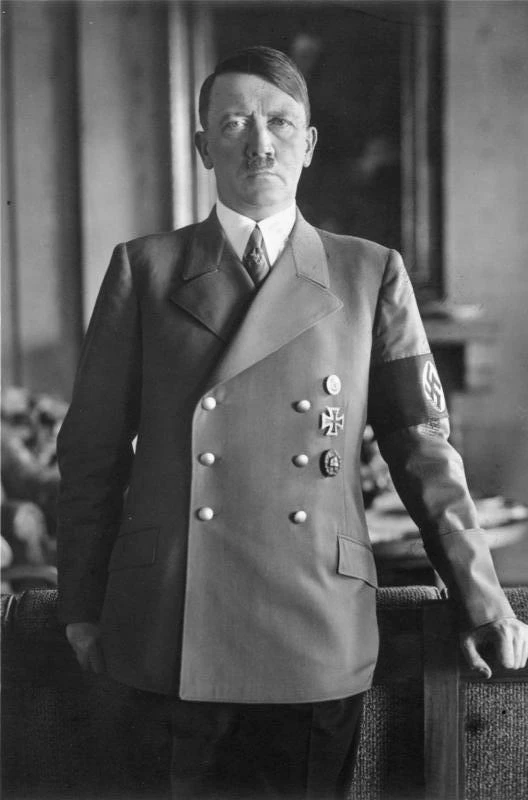
Hitler reasons otherwise. He gives weight to economic and ideological objectives: the resources of Ukraine (wheat, the coal of the Donbass), the oil of the Caucasus beyond, and Leningrad, cradle of Bolshevism, to the north. The place to be given to Moscow in this hierarchy of objectives becomes the object of a standoff with his generals.
The Führer must resolve this fundamental strategic disagreement: maintain the main effort on Moscow as his generals demand; divert the armour of toward the south (Kiev) and the north (Leningrad) for economic objectives; or attempt both at once, at the risk of dispersing everything. The choice may decide the outcome of the campaign — and of the war.
Should Hitler aim at Moscow or divert the effort toward Kiev and Leningrad?
Hitler imposes diverting the armour toward Kiev and Leningrad: he judges Moscow secondary and wants first to clear the flanks. Through his directive and his memorandum of August 1941, he diverts Guderian's armour toward the south: this is the encirclement of Kiev (September 1941), the greatest encirclement battle in history, which captures some 600,000 Soviet soldiers — a resounding tactical triumph. But this detour costs decisive weeks: when the offensive on Moscow (Operation Typhoon) finally resumes in October, the autumn, the mud (rasputitsa), then the winter and Zhukov's Siberian reserves will break it at the gates of the capital in December. The choice of August 1941 — Kiev rather than Moscow — is one of the major controversies of the war: a brilliant short-term victory, it cost Hitler, according to many historians, his only chance of taking Moscow before winter.
Learn more about this event
Related polls
10
Hitler — the Eve of Barbarossa
Adlertag — which targets?
Brauchitsch — Reich Chancellery, 5 November
The doctrine of terror bombing
Dönitz at Sengwarden — the winter pause
Fall Gelb — the order of 9 May 20:00
Gibraltar after the rebuff at Hendaye
Goering at Carinhall — the promise to Hitler
Hitler at the Felsennest — the anguish of the flanks
Hitler and Fall Gelb — 29 postponements
Hitler — the Eve of Barbarossa
Adlertag — which targets?
Brauchitsch — Reich Chancellery, 5 November
The doctrine of terror bombing
Dönitz at Sengwarden — the winter pause
Fall Gelb — the order of 9 May 20:00
Gibraltar after the rebuff at Hendaye
Goering at Carinhall — the promise to Hitler
Hitler at the Felsennest — the anguish of the flanks