
Since September 7, 1940, London has been bombed almost every night. Our Londoner — a composite case representative of millions of inhabitants — faces the same choice every evening at nightfall: where to take shelter during the Blitz.
The authorities have distributed Anderson shelters (corrugated steel buried at the bottom of the garden) and Morrison shelters (a steel cage inside the dwelling), and laid on public shelters. But many find them cramped, damp or unsafe. Another solution draws the crowds: going down into the Underground stations, deep and solid. At first, however, the government forbids it — for fear of a "shelter mentality" that would pin the population below ground, and so as not to disrupt transport. The first weeks of the Blitz have already produced thousands of dead and homeless, and the East End, close to the docks, pays the heaviest price.
Every evening, a family must decide: stay at home in the garden shelter, head for a neighborhood public shelter, or defy the rule and go down into the Tube. The choice involves safety, sleep and morale, in a city where the siren can wail at any moment.
Where should a Londoner spend the nights under the Blitz?
Tens of thousands of Londoners impose C as a fait accompli: they buy a ticket and settle on the platforms, forcing the authorities to give way. By the end of September, the government organizes life in the stations — bunks, canteens, sanitation, traveling libraries. As many as 150,000 people sleep there at the height of the Blitz, although most Londoners actually stay home or in surface shelters. The Tube becomes the iconic image of British resilience, the "Blitz spirit." The reality is harsher: crowding, disease, and shelters that can themselves prove deadly when a bomb breaks through (Balham, October 1940). The Blitz will kill more than 40,000 British civilians by May 1941, nearly half of them in London.
Learn more about this event
Related polls
10
Coventry — the night of November 14
The Channel Islands — open city?
The Minister, the Fleet and the Empty Plates
The "little ships" of Dunkirk
The Little Ships — call of 27 May
Cambridge, 1939: The Evacuated LSE Student and Conscription
The Red Cross and the Missing
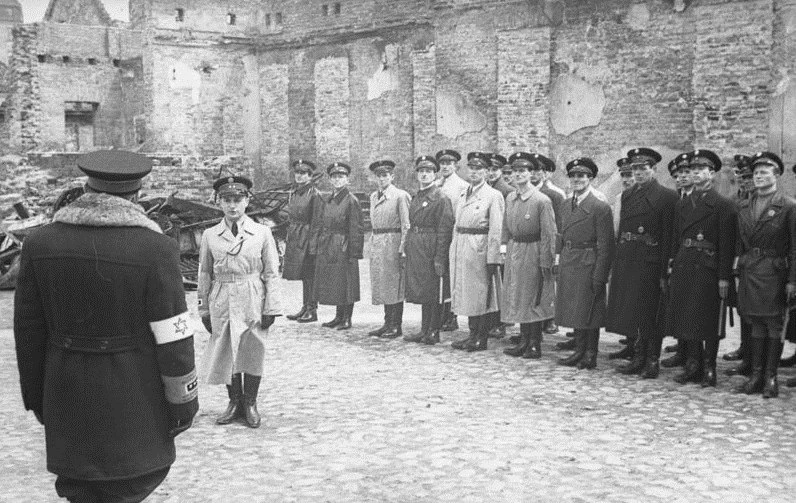
Czerniaków — the Warsaw ghetto sealed
The Evacuation of the Children
British Coal for the Winter of 1939
Coventry — the night of November 14
The Channel Islands — open city?
The Minister, the Fleet and the Empty Plates
The "little ships" of Dunkirk
The Little Ships — call of 27 May
Cambridge, 1939: The Evacuated LSE Student and Conscription
The Red Cross and the Missing
Czerniaków — the Warsaw ghetto sealed
The Evacuation of the Children