
The fort of Aubin-Neufchâteau
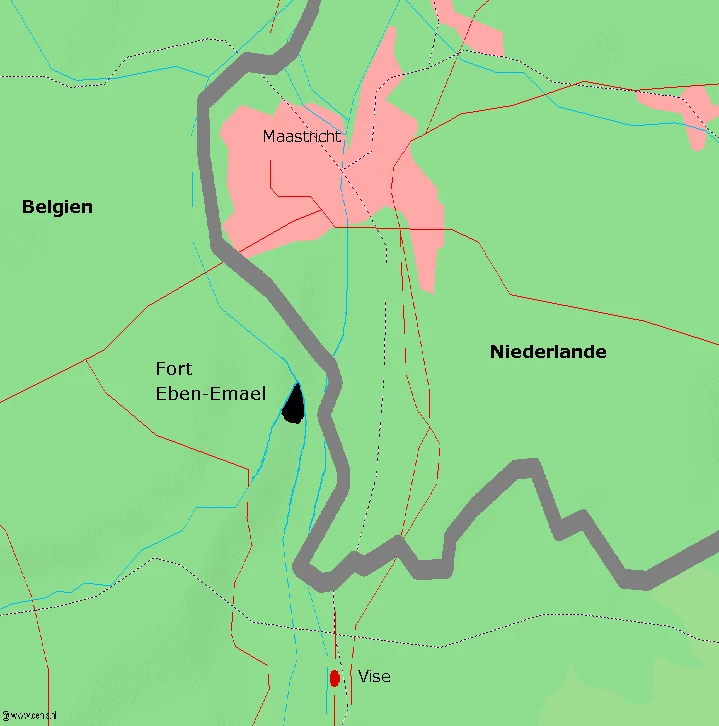
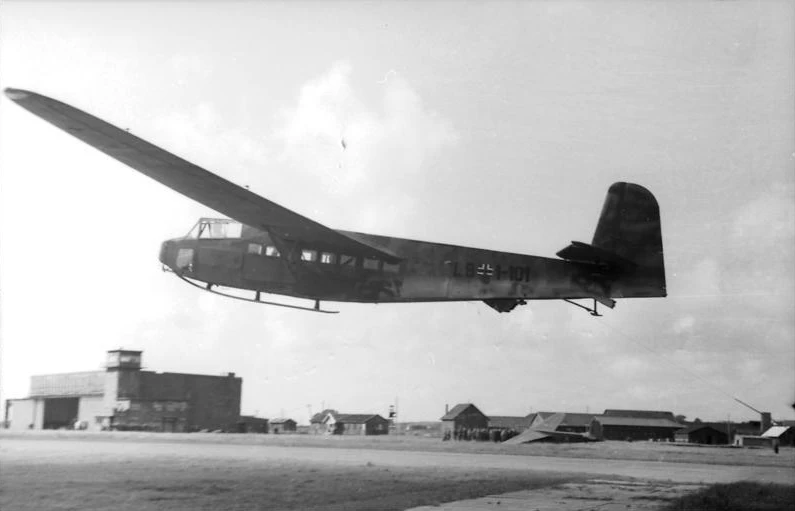
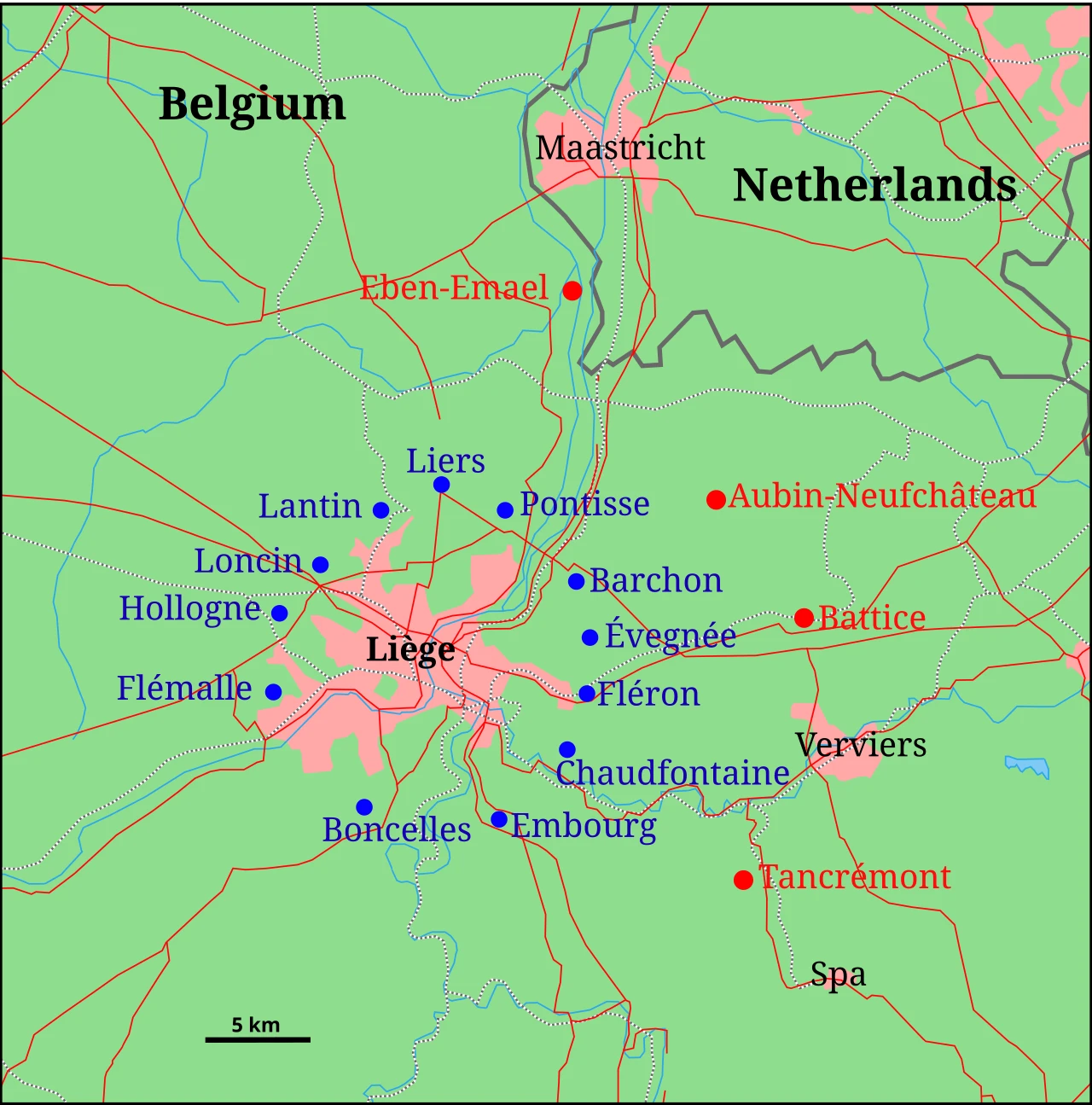
The fortified position of Liège had been modernised in the 1930s with four new forts: Ében-Émael, Battice, Tancrémont and Aubin-Neufchâteau. On 10 May 1940, the most famous, Ében-Émael, fell within hours to an assault by German gliders. The shock was immense: if the "strongest fort in the world" gave way at once, what could the others do?
Aubin-Neufchâteau, built in 1936, was not even fully completed. Its garrison, about five hundred men, soon found itself isolated behind the German lines racing westward, and subjected to a methodical bombardment by artillery and Stukas.
The commander faced a cruel dilemma. He could hold the work, tie down German troops and gain days, but with no hope of relief and at the cost of mounting losses. He could capitulate to spare his garrison, once the guns had been knocked out and the ammunition was running low. Or he could attempt a desperate sortie. The value of the sacrifice was measured in the days wrested from the enemy, while the bulk of the Belgian army fell back behind him.
Should the commander hold an isolated, unfinished fort to the end, or capitulate to spare his garrison?
The commander chose A: Aubin-Neufchâteau held out for about twelve days, in liaison with the neighbouring fort of Battice, tying down German resources behind the front. It was only after the ammunition was exhausted and most of its guns neutralised that the garrison — about 526 men — surrendered on 21 May 1940. The resistance of the Liège forts, overshadowed by the spectacular fall of Ében-Émael, illustrates the other face of the campaign: isolated garrisons stubbornly holding doomed positions, to buy time for an army in retreat.
Learn more about this event
Related polls
10
The abatis of the Chasseurs Ardennais
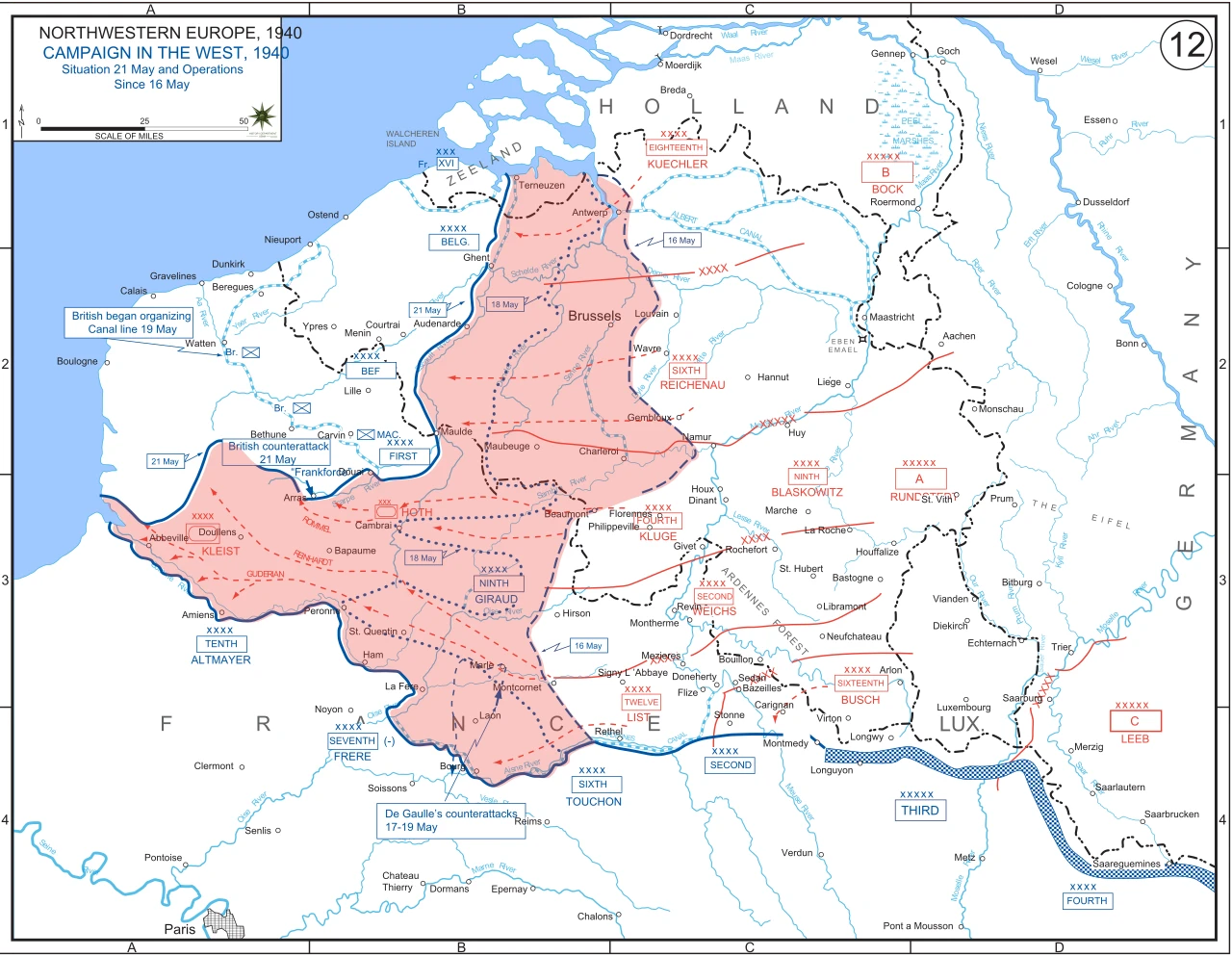
The Battle of the Lys
Bodange — Bricart and the Chasseurs Ardennais
The bridges of the Meuse
Eben-Emael — Jottrand under the explosions
Kanne bridge — fourth airborne target
Veldwezelt bridge — Beert and the demolition officer
Vroenhoven bridge — the demolition order
The bridges of the Albert Canal
The fortified position of Liège
The abatis of the Chasseurs Ardennais
The Battle of the Lys
Bodange — Bricart and the Chasseurs Ardennais
The bridges of the Meuse
Eben-Emael — Jottrand under the explosions
Kanne bridge — fourth airborne target
Veldwezelt bridge — Beert and the demolition officer
Vroenhoven bridge — the demolition order
The bridges of the Albert Canal