
Pajala — Khorov on 21 January
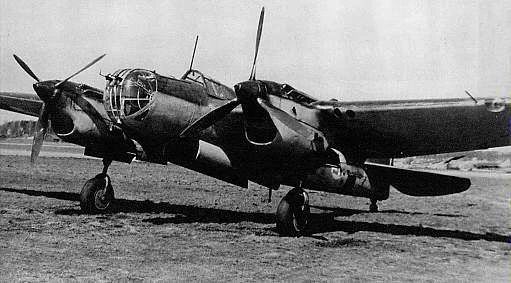
Around 11:30 on 21 January 1940 a flight of Soviet Tupolev SB-2 bombers (five aircraft) of the was operating over northern Karelia. Mission: bomb the match factory at Rovaniemi (Finland). Poor visibility (light snow, low cloud), navigation errors: the pilots mistook one Finnish river for another, strayed across the Swedish frontier and reached Pajala — a small Swedish town of 1,800 inhabitants in Norrbotten.
Captain , 28, the patrol leader, ordered the bombs released on what he identified as a "Finnish military depot" at 12:00. 130 bombs fell on Pajala — residential quarter, primary school, railway station. The Swedish villagers, who had thought their country a neutral safely away from the war, were woken. There were no fatalities — the bombs fell mostly in snow-covered gardens, several failing to explode. Material damage: 4 houses destroyed, 6 damaged, the station partially hit.
The Swedish government (Hansson, Günther at Foreign Affairs) was at once informed. A major diplomatic crisis: could Sweden enter the war against the USSR after this aerial aggression?
How should Hansson and Günther respond?
Hansson and Günther chose B. The diplomatic note was sent through Stockholm to Moscow on 22 January. Moscow replied by Molotov telegram on 27 January: official apologies (a rare Soviet diplomatic initiative), acknowledgement that the pilots had "deviated from their route", and an offer to reimburse the damage (40,000 Swedish crowns of the day). The crisis was defused. Sandler, now out of government, criticised this moderation as "Scandinavian cowardice". The Pajala incident became a diplomatic precedent: it showed that the neutral Scandinavians could absorb such an incident without breaking with neutrality. Hitler, in March 1940 during the preparation of Weserübung, drew the opposite lesson: the Scandinavians lacked credibility in defending themselves, which reassured him as to the feasibility of invading Norway. Khorov continued in service, shot down 3 German aircraft in 1941, survived the war and ended as a civil engineer. He died in 1968 in Leningrad. Pajala today houses a museum commemorating the bombing.
Learn more about this event
Related polls
10
Goering at Carinhall — the promise to Hitler
Hannah Arendt, Stateless and Interned, Facing Exile
The Youth of the Reich
The German Student Facing the Nazification of the University (1939)
The Karten: Rationing Germany at War
A Danzig Customs Officer on the Day of Annexation

Join the Party?
Baku in the crosshairs — Operation Pike
Hitler at the Sportpalast — 30 January, 8 pm
Smushkevich — report to Stalin
Goering at Carinhall — the promise to Hitler
Hannah Arendt, Stateless and Interned, Facing Exile
The Youth of the Reich
The German Student Facing the Nazification of the University (1939)
The Karten: Rationing Germany at War
A Danzig Customs Officer on the Day of Annexation
Join the Party?
Baku in the crosshairs — Operation Pike
Hitler at the Sportpalast — 30 January, 8 pm