
The Long Columns of Prisoners
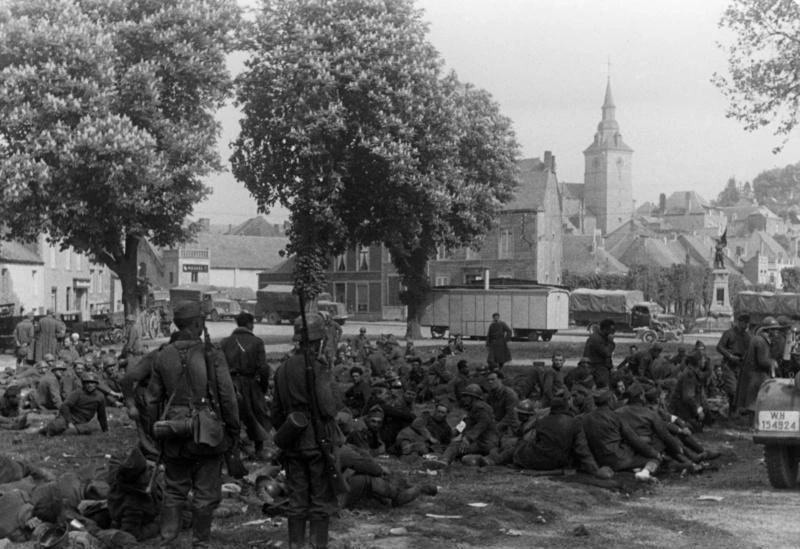
The German advance takes prisoners by the hundreds of thousands. Gathered together, they are marched to the rear, then towards Germany, in endless columns on foot: files of exhausted, ill-fed men, walking for days on end under enemy guard, in the heat and dust of the crowded roads.
For you, the prisoner, the march poses choices of survival and of conscience. You may walk obediently in the column to avoid mistreatment and conserve your strength. You may try to escape on the strength of a passing wood, a village, a moment of inattention by the guards — at the risk of being shot. Or you may help others within the column (share water, support the weakest), at the risk of slowing down and drawing blows.
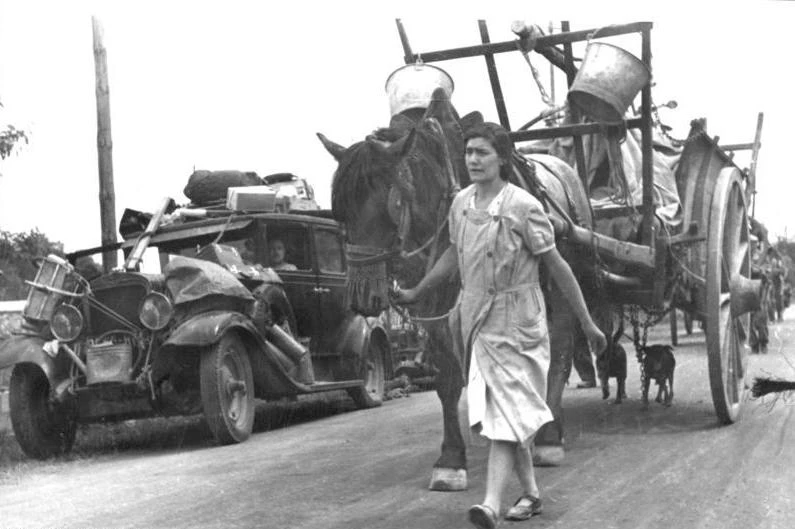
Fatigue, hunger and uncertainty about the destination make each day gruelling. The columns of prisoners, which sometimes cross the streams of refugees, are one of the striking images of the defeat. Escaping now, on home soil, is still possible; once in Germany, it will be all but hopeless.
Should our prisoner walk obediently, try to escape, or help others at the risk of slowing down?
The majority, exhausted and under close guard, opt for A, but many attempt B while still on home soil: escapes from the columns, on the roads of Belgium and France, are relatively frequent in May–June 1940, before the transfer to Germany where they will become very difficult. The columns, thousands of men long, march the some 1.8 million French prisoners and 200,000 Belgians towards the camps. The conditions of the march — hunger, thirst, occasional mistreatment — vary according to the guards. For many, these roads of captivity, crossing the exodus, will remain the image of the humiliation of 1940 and the threshold of long years of detention.
Learn more about this event
Related polls
10
The roads for the refugees or for the army
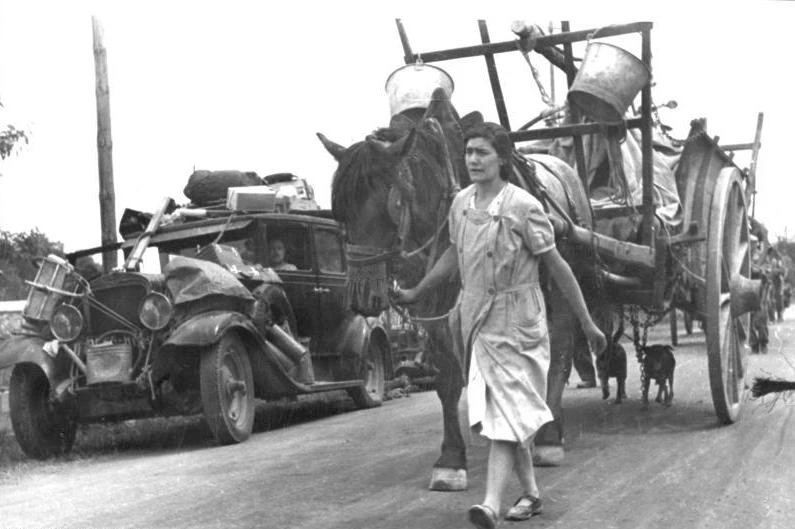
The exodus — flee or stay
The Flamenpolitik of the Prisoners of War
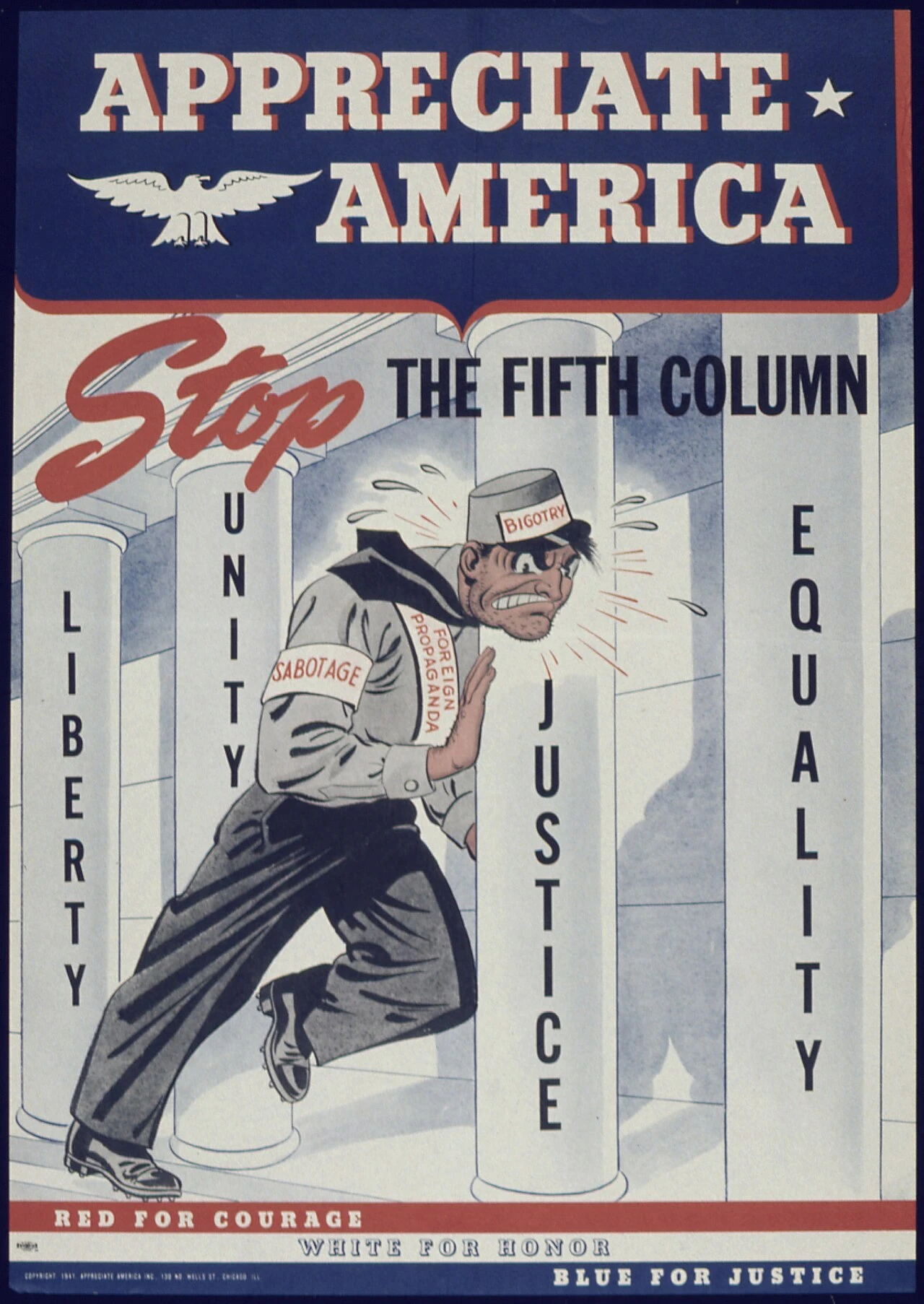
The fifth-column psychosis
The strafed roads
The Isolated Soldier after the Capitulation
Under the bombs — the Belgian towns
Mobilised at the border
The Press under German Control
The return from the exodus
The roads for the refugees or for the army
The exodus — flee or stay
The Flamenpolitik of the Prisoners of War
The fifth-column psychosis
The strafed roads
The Isolated Soldier after the Capitulation
Under the bombs — the Belgian towns
Mobilised at the border
The Press under German Control