
Leopold III takes command
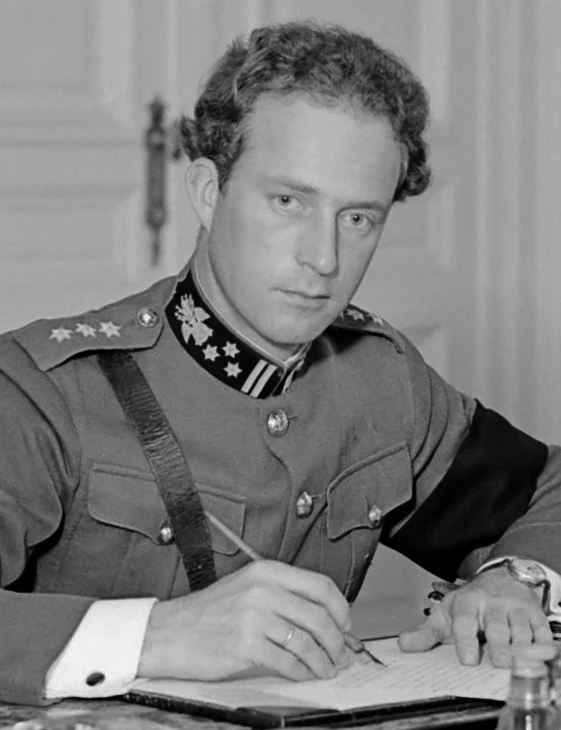
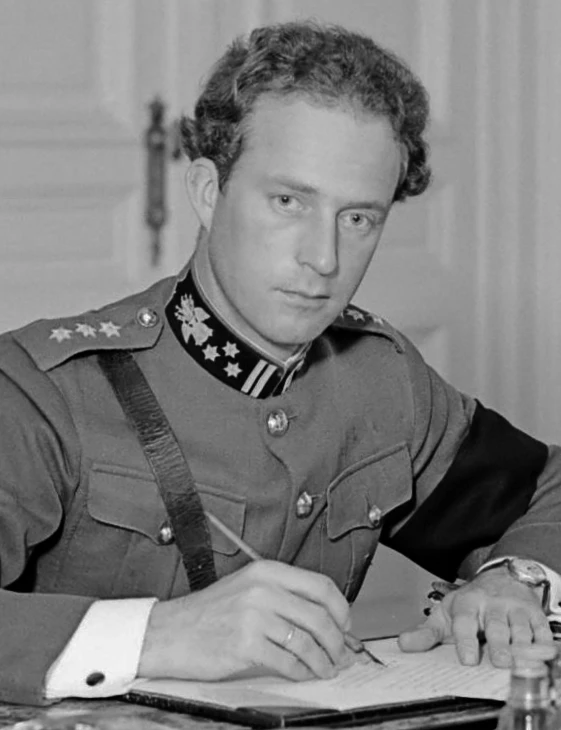
On the morning of 10 May 1940, Germany invaded neutral Belgium. In Brussels, King had to embody the country's response. His father, King Albert, lived on in the national memory as the "Knight-King" who personally took the head of the army in 1914 and symbolised Belgian resistance.
Leopold had several options. He could himself assume the post of commander-in-chief of the army, following in his father's footsteps, to galvanise the nation and shape the conduct of operations. Or he could leave matters to his general staff and the government, confining himself to a constitutional and symbolic role, letting the military direct the battle.
The choice was not trivial. By making himself a war leader, the king bound his fate to that of the army — including in the event of defeat and capitulation, where his position might place him at odds with a government that might, for its part, continue the fight from abroad. Constitutionally, his ministers remained responsible; but in the field, the question of who commanded, and in whose name, would weigh on the entire eighteen-day campaign.
Should Leopold himself take command of the army, as his father did in 1914?
Leopold chose A: he took command of the Belgian army, declaring that he placed himself at its head "as his father did in 1914, with the same confidence and the same faith". This stance bound him to his troops throughout the eighteen-day campaign, but it also led him, on 28 May, to decide alone on the capitulation, remaining with his army rather than following his government into exile. The rift between the king and his ministers, begun as early as mid-May, would lead to the long and bitter post-war "Royal Question". By tying his fate to that of the army, Leopold had staked far more than the battle of 1940.
Learn more about this event
Related polls
10
Neutral Belgium — let the Allies in?
The Capitulation of 28 May
War council — leave central Norway?
Brussels, September 1939: a small country's tightrope walk
The War Cabinet — Negotiate or Carry On
Dunkirk: should the French be saved alongside the British?
Mining the Rhine — Operation Royal Marine
Winkelman and the fate of the Netherlands
Reynaud — Matignon 21 March
Reynaud or Pétain — Carry On or the Armistice
Neutral Belgium — let the Allies in?
The Capitulation of 28 May
War council — leave central Norway?
Brussels, September 1939: a small country's tightrope walk
The War Cabinet — Negotiate or Carry On
Dunkirk: should the French be saved alongside the British?
Mining the Rhine — Operation Royal Marine
Winkelman and the fate of the Netherlands
Reynaud — Matignon 21 March