
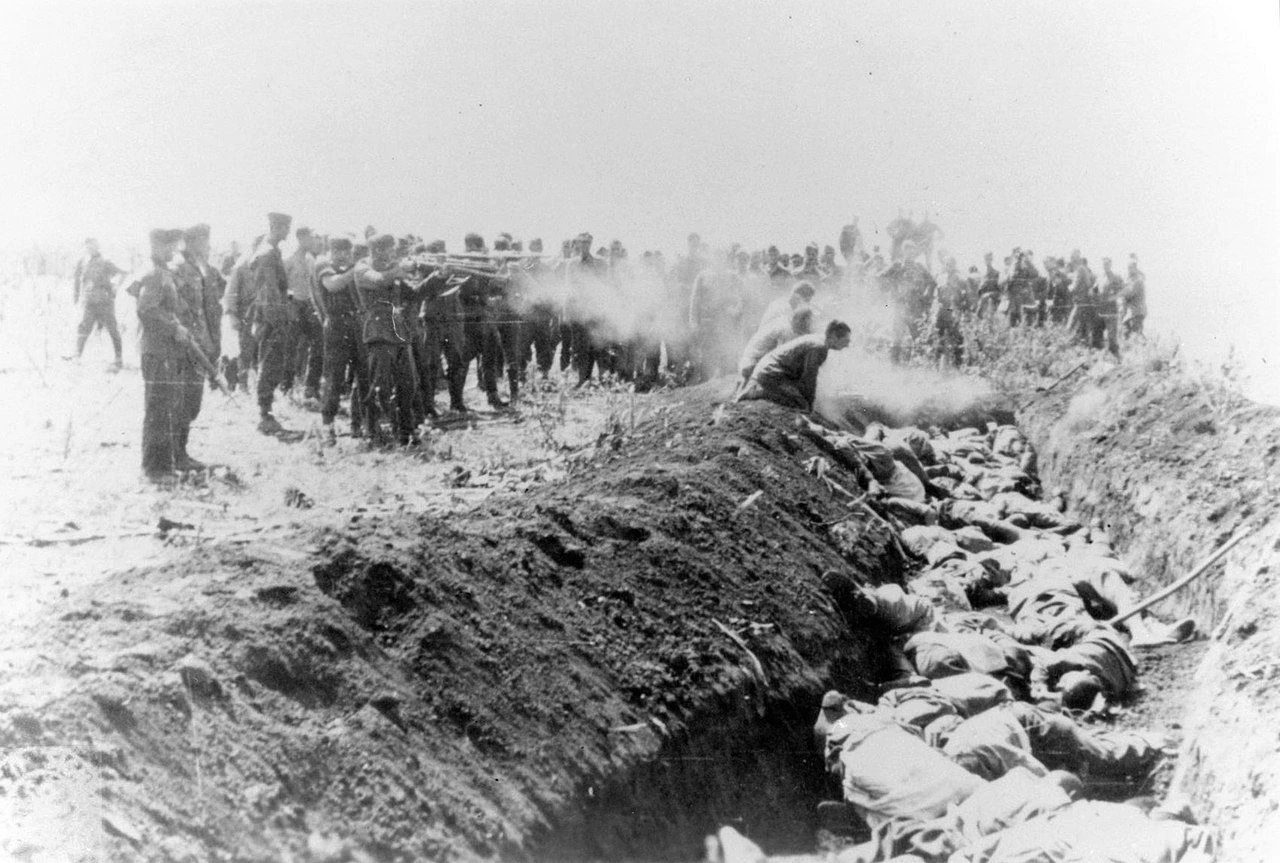
Since the start of Barbarossa, the have been murdering by gunfire, at a growing pace, tens of thousands of Jews on the Eastern Front. But these killings are still geographically limited and conducted piecemeal. At the summit of the regime, the 'Jewish question' enters a new phase: expulsion (Madagascar, deportation to the 'East') proves impracticable while the war lasts, and ideological radicalization pushes toward more extreme 'solutions'.
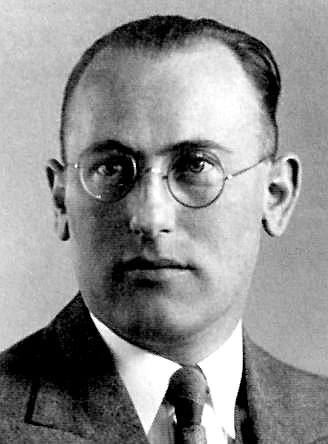
It is in this context that, on 31 July 1941, — acting on Hitler's instruction and in the name of the authority that the latter has delegated to him — signs a letter addressed to , head of the Reich Security Main Office (RSHA).
The text, brief, charges Heydrich with making 'all necessary preparations, on the organizational, material and financial levels, with a view to an overall solution (Gesamtlösung) of the Jewish question in the German sphere of influence in Europe'. The exact meaning of this mandate — administrative coordination, green light for extermination, or a stage in a process — is still debated. But it confers on Heydrich the bureaucratic authority to plan the fate of all the Jews of Europe.
What does the mandate entrusted to Heydrich on 31 July 1941 represent?
Historians situate this mandate between B and C: it does not by itself 'decree' the genocide — a processual decision, taken in stages during the second half of 1941 — but it gives Heydrich the authority to plan the 'overall solution' on a continental scale. Heydrich will indeed attach a copy of this letter to the invitations to the Wannsee Conference (January 1942), where the organization of the 'final solution' will be coordinated. In the interval, the massacres expand and tip over, in the summer-autumn of 1941, toward total extermination, including of women and children. The mandate of 31 July is one of the key documents attesting to the involvement of the summit of the Nazi state in the genesis of the Holocaust.
Learn more about this event
Related polls
10
Heydrich — the Conference of 21 September
Kaunas — the first pogroms
Beria — the NKVD ordinance of 19 September
Generalplan Ost — the Hunger Plan
Katyn — the order on Beria's desk
Serov — 10 February 06:00 at Lwów
The German "Uranverein": a priority refused
The Commissar Order

The Barbarossa decree — the 'licence to kill'
The Obersalzberg Speech
Heydrich — the Conference of 21 September
Kaunas — the first pogroms
Beria — the NKVD ordinance of 19 September
Generalplan Ost — the Hunger Plan
Katyn — the order on Beria's desk
Serov — 10 February 06:00 at Lwów
The German "Uranverein": a priority refused
The Commissar Order
The Barbarossa decree — the 'licence to kill'