
The collapse of the 9th Army
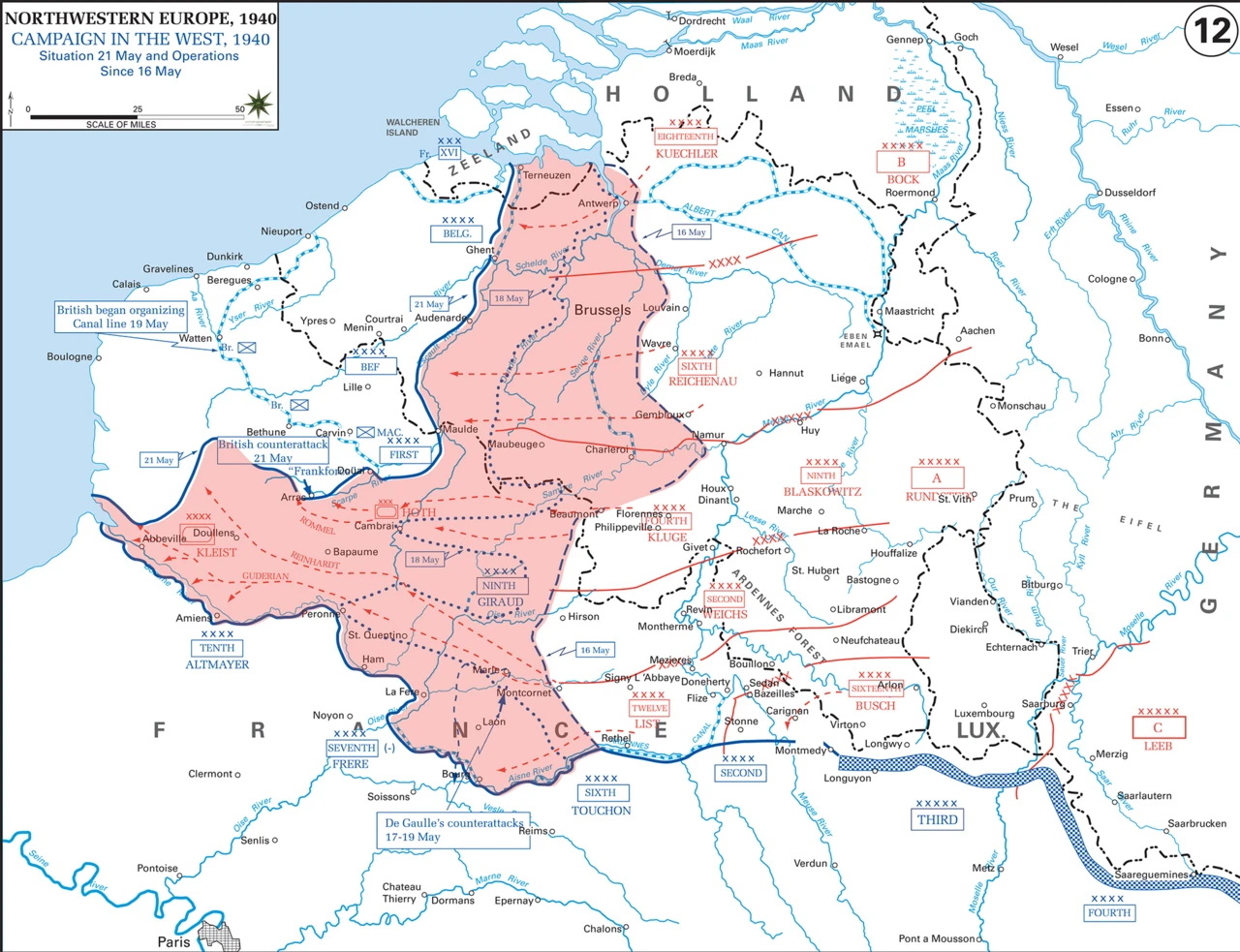
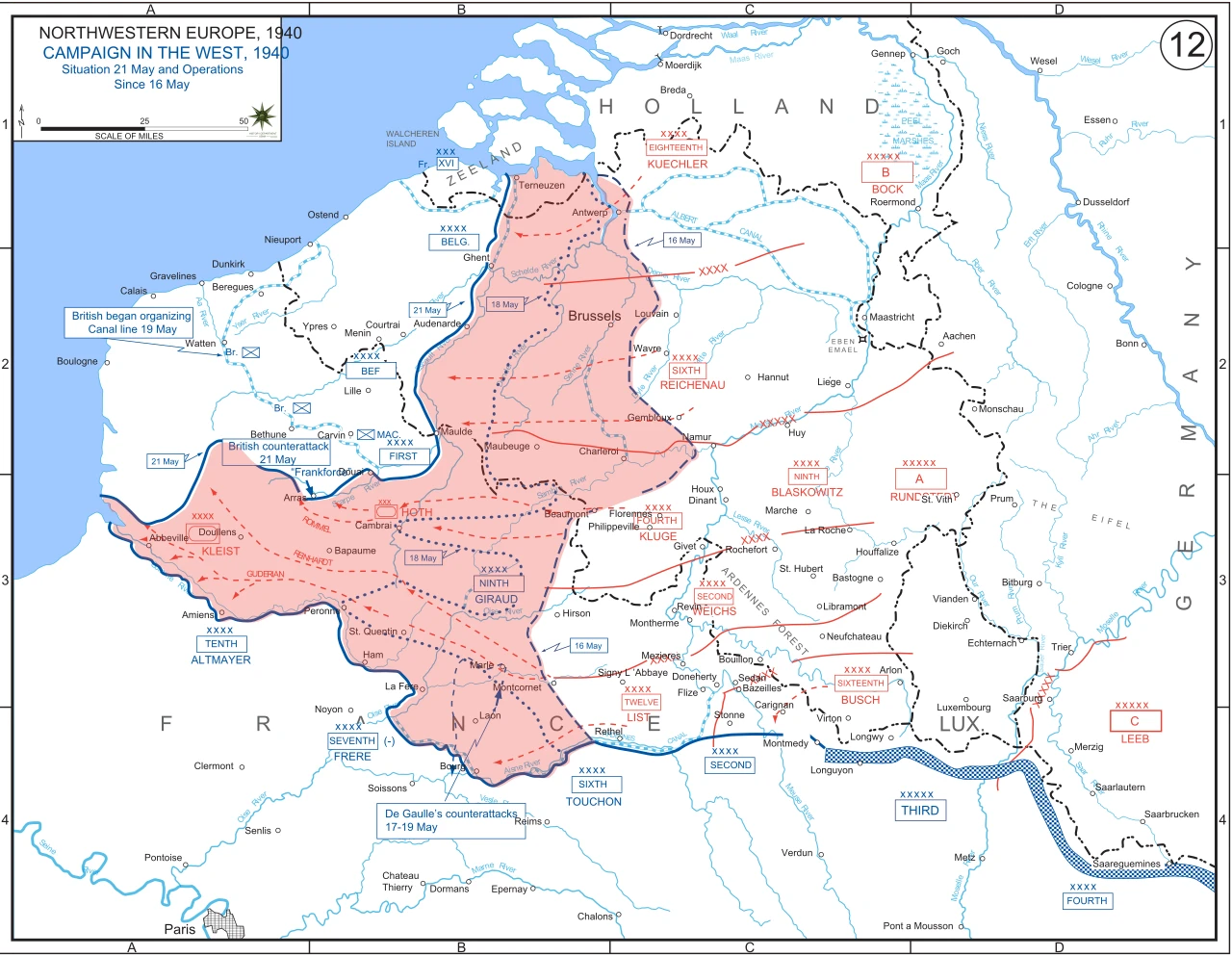
General 's holds the Meuse sector between Sedan and Dinant — precisely where the German bridgeheads (Guderian, Reinhardt, Rommel) have just been established. Made up in part of second-rate reserve units, stretched across a wide front believed to be little threatened, it is struck head-on by the breakthrough.
Under the combined blows of the armour and the Luftwaffe, the front falls apart. Corap must react quickly. Attempt a general counter-attack to reduce the bridgeheads before they merge. Order a general withdrawal to reconstitute a line further back. Or hold in place, plugging the breaches one by one.
Time is working against him: with every hour, the Panzers widen the breaches and drive deeper. A decision that is too slow or poorly executed would turn the local rupture into the rout of an entire army, opening the road to the Channel. Corap has few mobile reserves and only fragmentary information about the true scale of the breakthrough.
Should Corap counter-attack the bridgeheads, order a general withdrawal, or hold in place by plugging the breaches?
For want of reserves and faced with the speed of the breakthrough, the slides towards B in disorder: the withdrawal, poorly coordinated and hastened by the German advance, turns into collapse. Within a few days, the ceases to exist as an organised force, opening a gaping breach through which the armour races westward. Corap is dismissed as early as 15 May and replaced by Giraud (himself soon captured). The collapse of the , a poorly equipped force placed on the most dangerous axis, is one of the turning points of the campaign: it transforms the Meuse breakthrough into an irretrievable strategic rupture. Corap would serve as the scapegoat for a disaster with far deeper causes.
Learn more about this event
Related polls
10
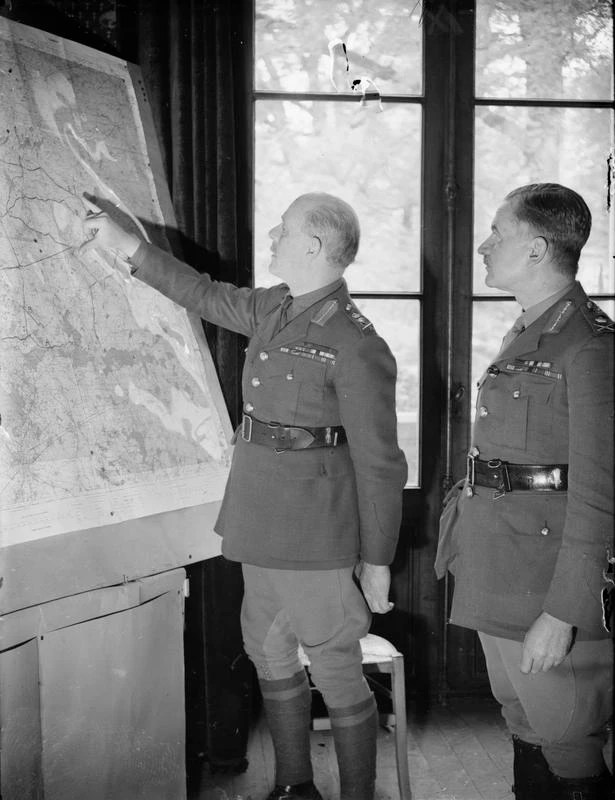
Gort at Habarcq — trust in the French plan
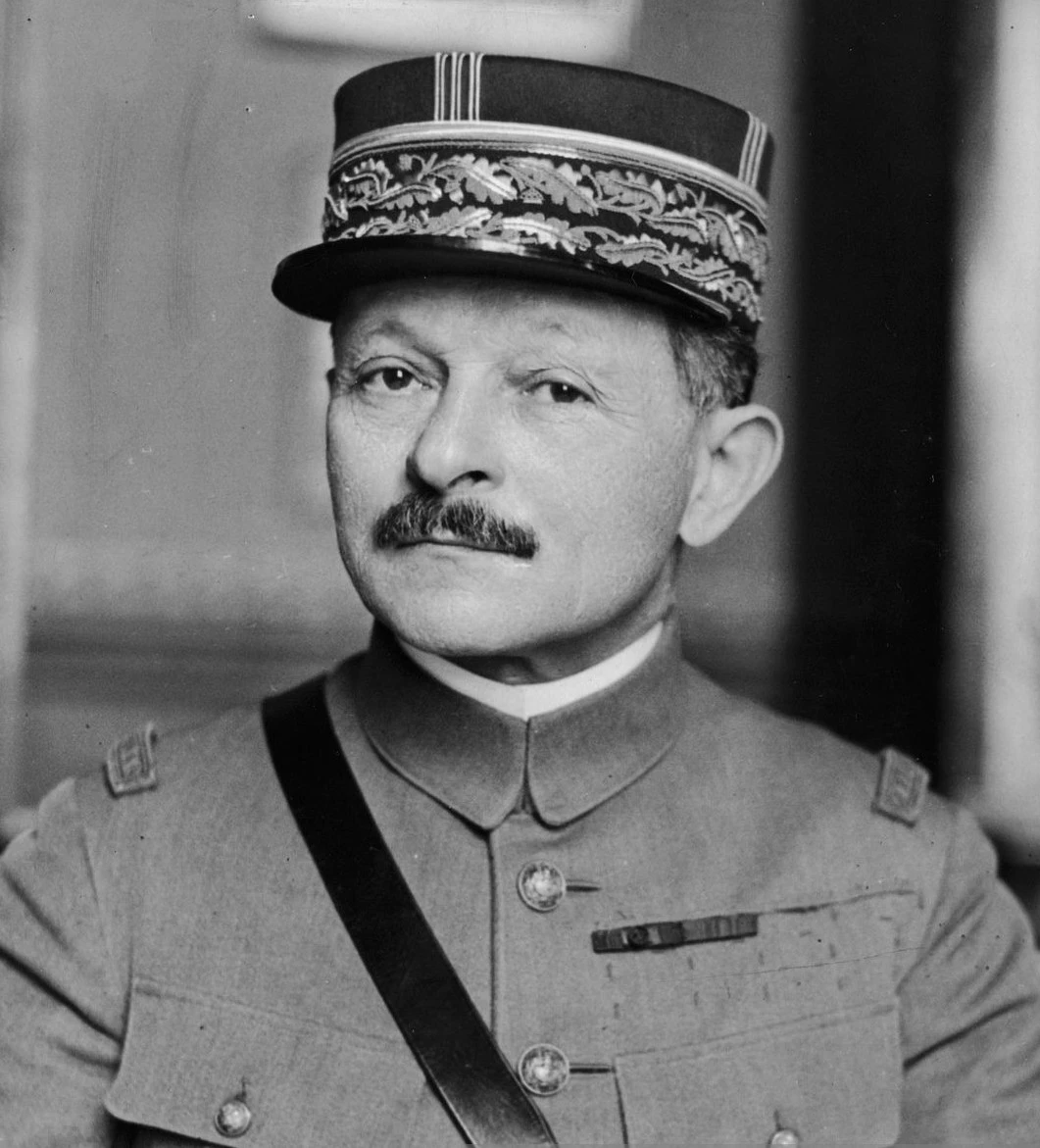
Weygand — Vincennes 20 May 02:00
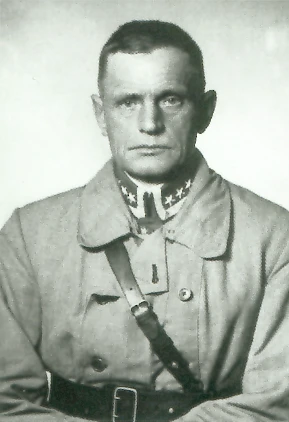
Gudbrandsdal — Ruge imposes his line
Touchon on the Aisne — Fall Rot

The abatis of the Chasseurs Ardennais
The tank battle of Hannut
The Battle of the Lys
The Capitulation of 28 May

"Cromwell" — England, 7 September 1940

The bridges of the Meuse
Gort at Habarcq — trust in the French plan
Weygand — Vincennes 20 May 02:00
Gudbrandsdal — Ruge imposes his line
Touchon on the Aisne — Fall Rot
The abatis of the Chasseurs Ardennais
The tank battle of Hannut
The Battle of the Lys
The Capitulation of 28 May
"Cromwell" — England, 7 September 1940