
The French exodus
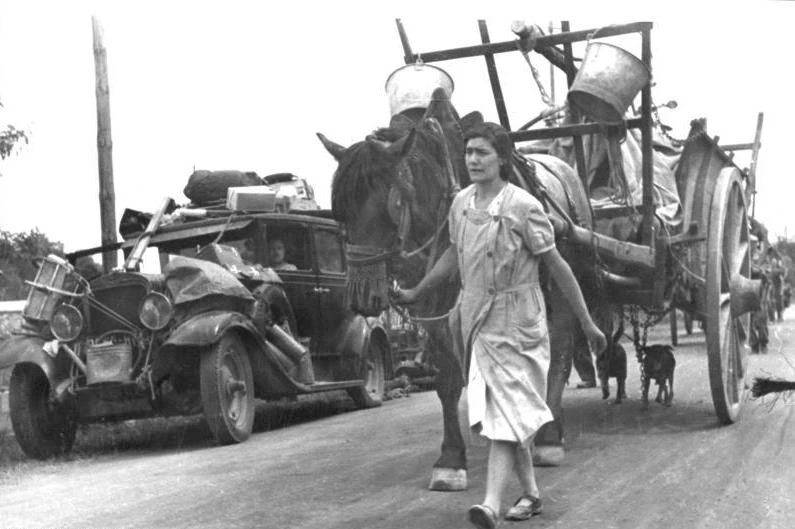
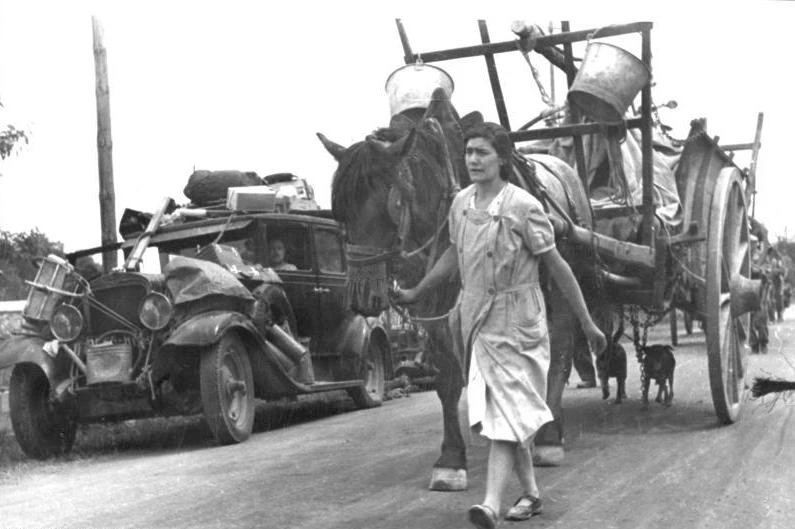
As the front collapses and the Germans advance, France in turn experiences an exodus of unprecedented scale: millions of civilians — the figure of eight million people is often cited, French and Belgian and Dutch refugees mingled together — pour onto the roads heading south, fleeing the enemy advance, the bombardments and the fear inherited from 1914.
For you, the French family, the dilemma is the same as for the Belgians a few days earlier, but on an even greater scale. Flee south as fast as possible, in the throng of the strafed roads, with no assured lodging or provisions. Stay at home and await the occupier, keeping house and belongings. Or leave belatedly, hoping that the front will stabilise — at the risk of being caught in the debacle.
The exodus disorganises everything: saturated roads, severed communications, an administration in flight, families separated. The government itself leaves Paris. Should you leave, stay, or wait? The exodus of 1940 would become a major national trauma and one of the symbols of the collapse of France.
Should our French family flee as fast as possible, stay at home, or wait before leaving?
As in Belgium, an immense mass chooses A: the French exodus of May–June 1940 throws as many as eight million people onto the roads, in one of the vastest population displacements in European history. The strafed roads, the emptied towns, the scattered families compose a tableau of chaos and distress. Most would return home during the summer, in the occupied zone or in the "free" zone. The exodus, by disorganising the rear and sapping morale, accompanies and aggravates the military defeat. It would leave a lasting mark on French memory and would feed, at the Liberation as in literature (Némirovsky, Suite française), the narrative of the terrible year.
Learn more about this event
Related polls
10
Belgian border — leave or wait out the storm
The Foreign Volunteers
Dunkirk: holding the line under the bombs
The exodus — flee or stay
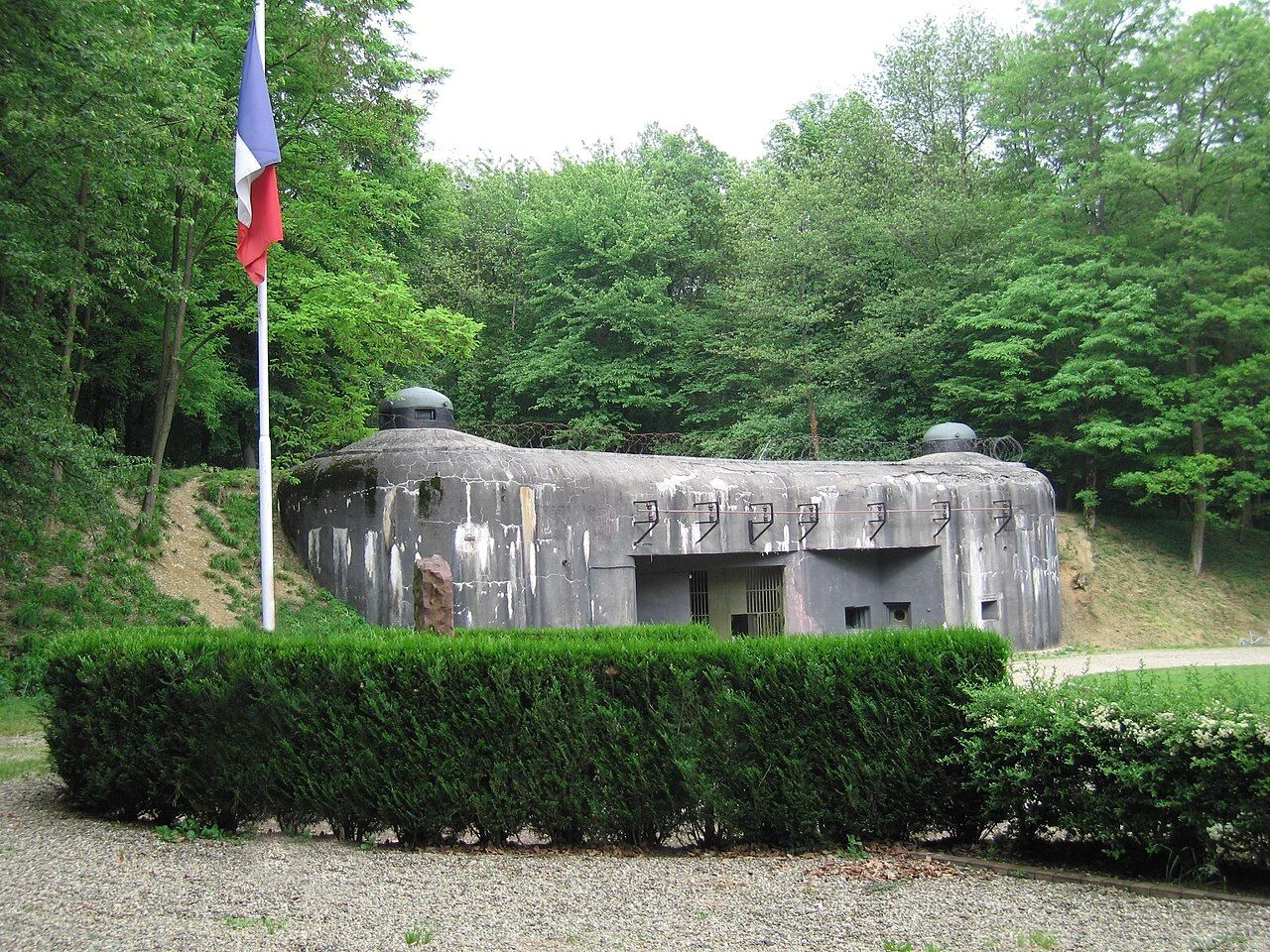
Hackenberg — a poilu on the Maginot
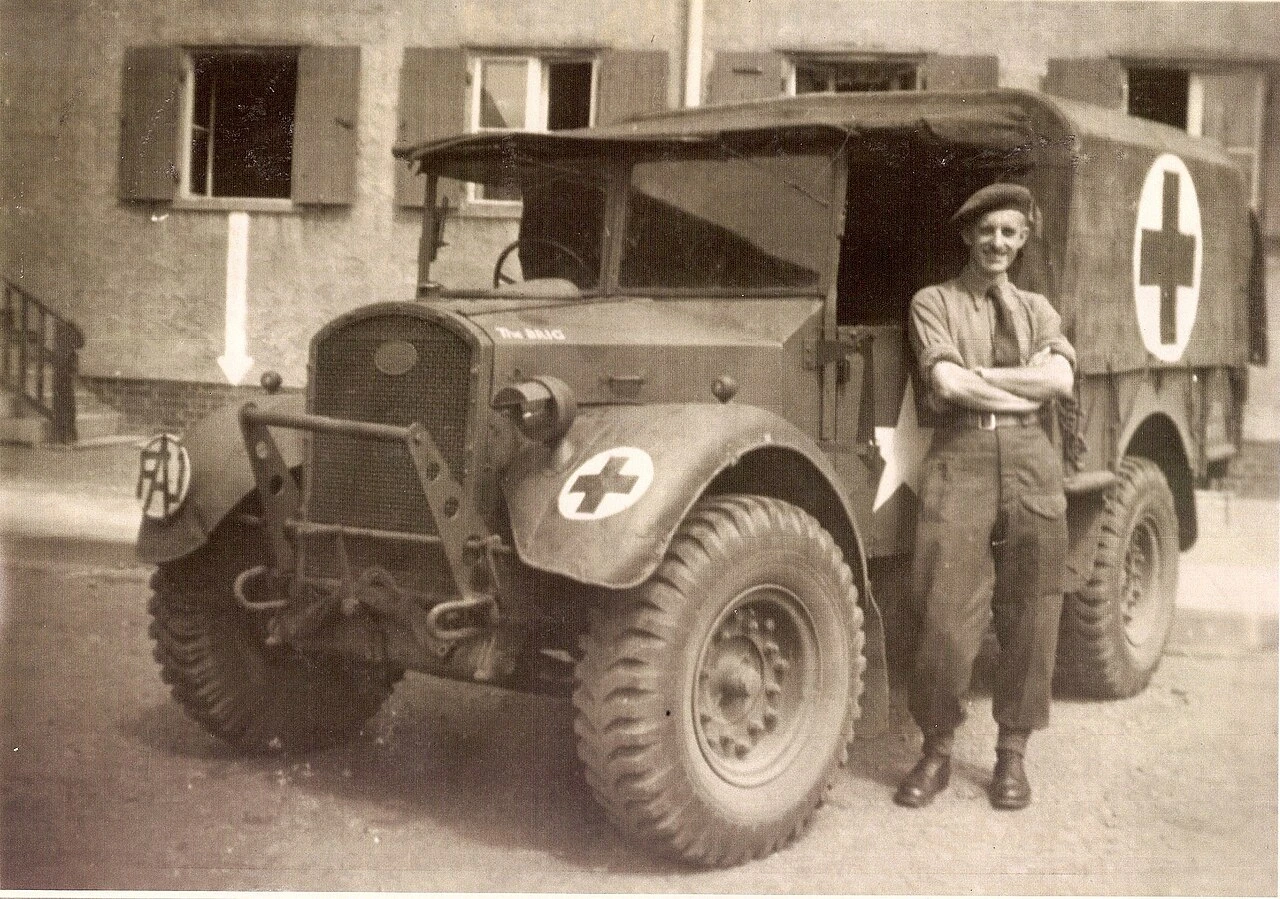
The Drawing of Lots at Rosendaël
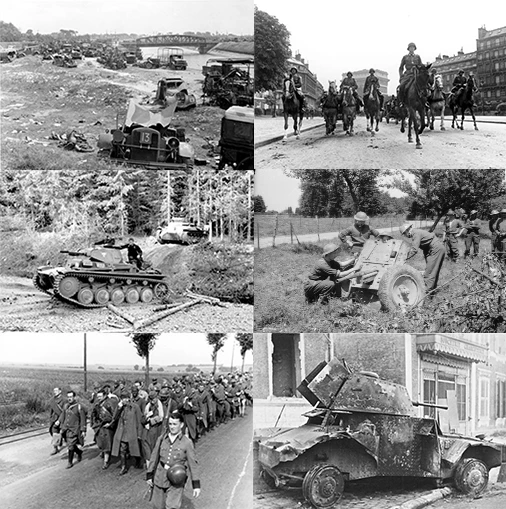
Morale on the home front
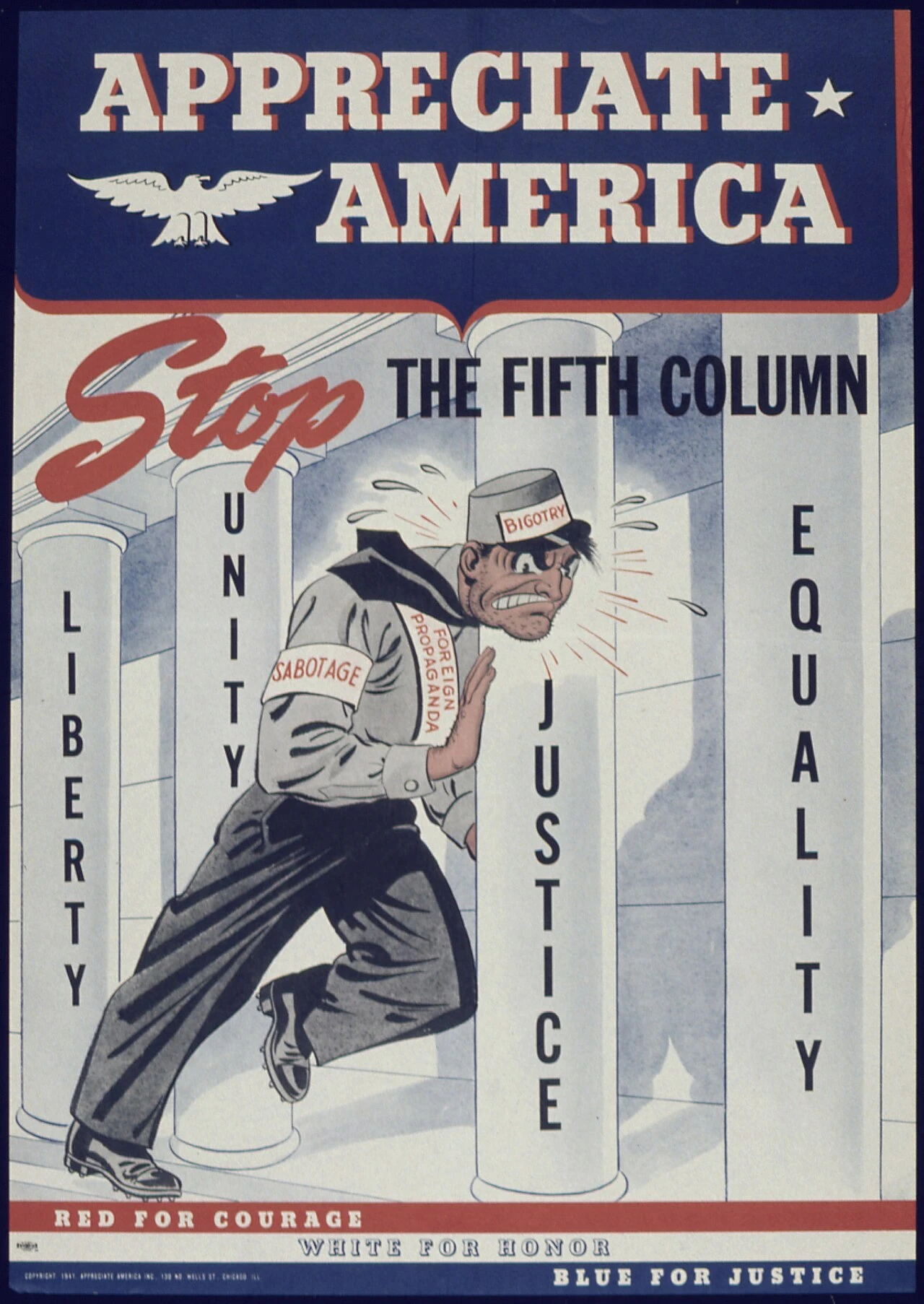
The fifth-column psychosis
Under the bombs — the Belgian towns

The Camps of the Retirada
Belgian border — leave or wait out the storm
The Foreign Volunteers
Dunkirk: holding the line under the bombs
The exodus — flee or stay
Hackenberg — a poilu on the Maginot
The Drawing of Lots at Rosendaël
Morale on the home front
The fifth-column psychosis
Under the bombs — the Belgian towns