
The Gembloux gap
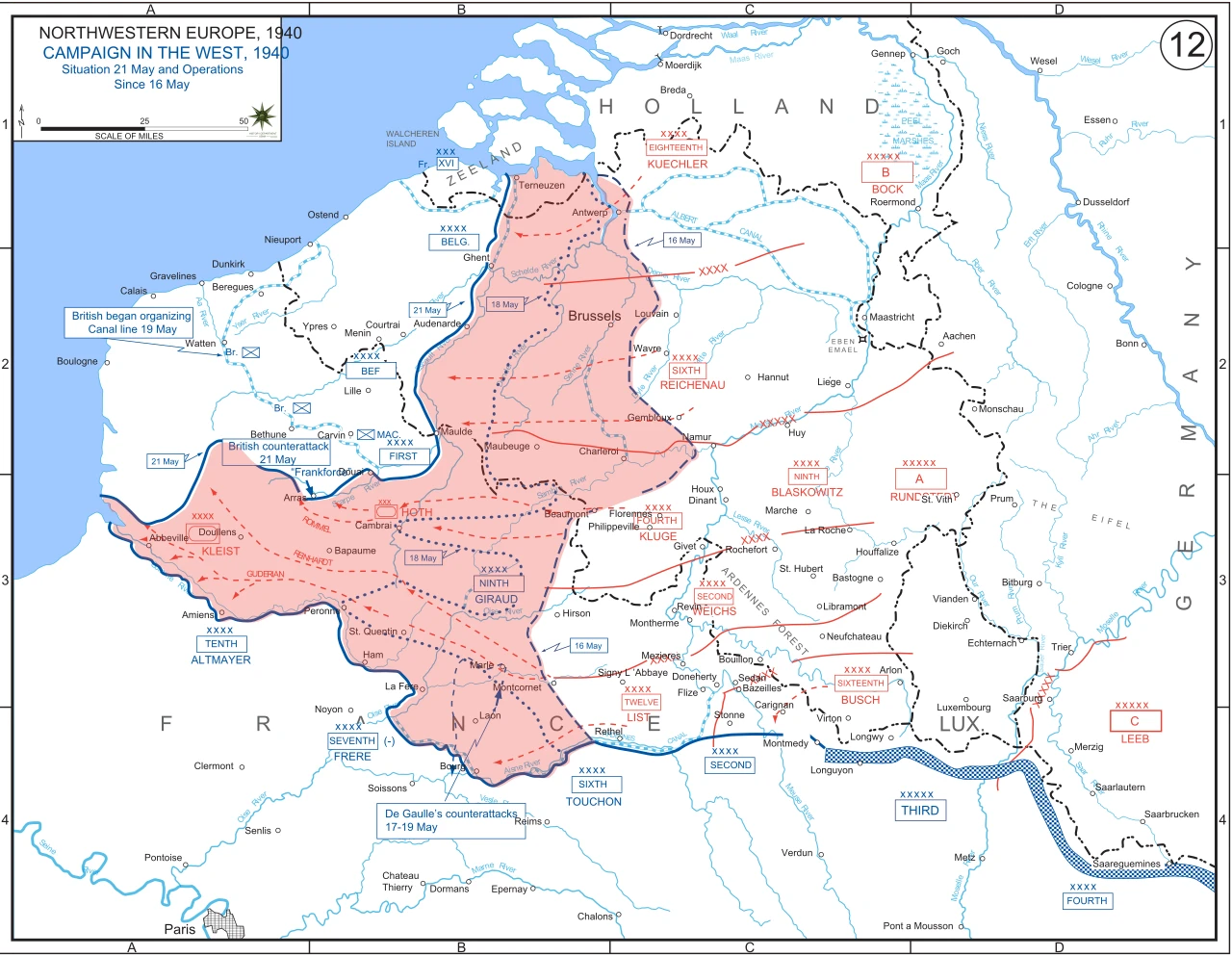
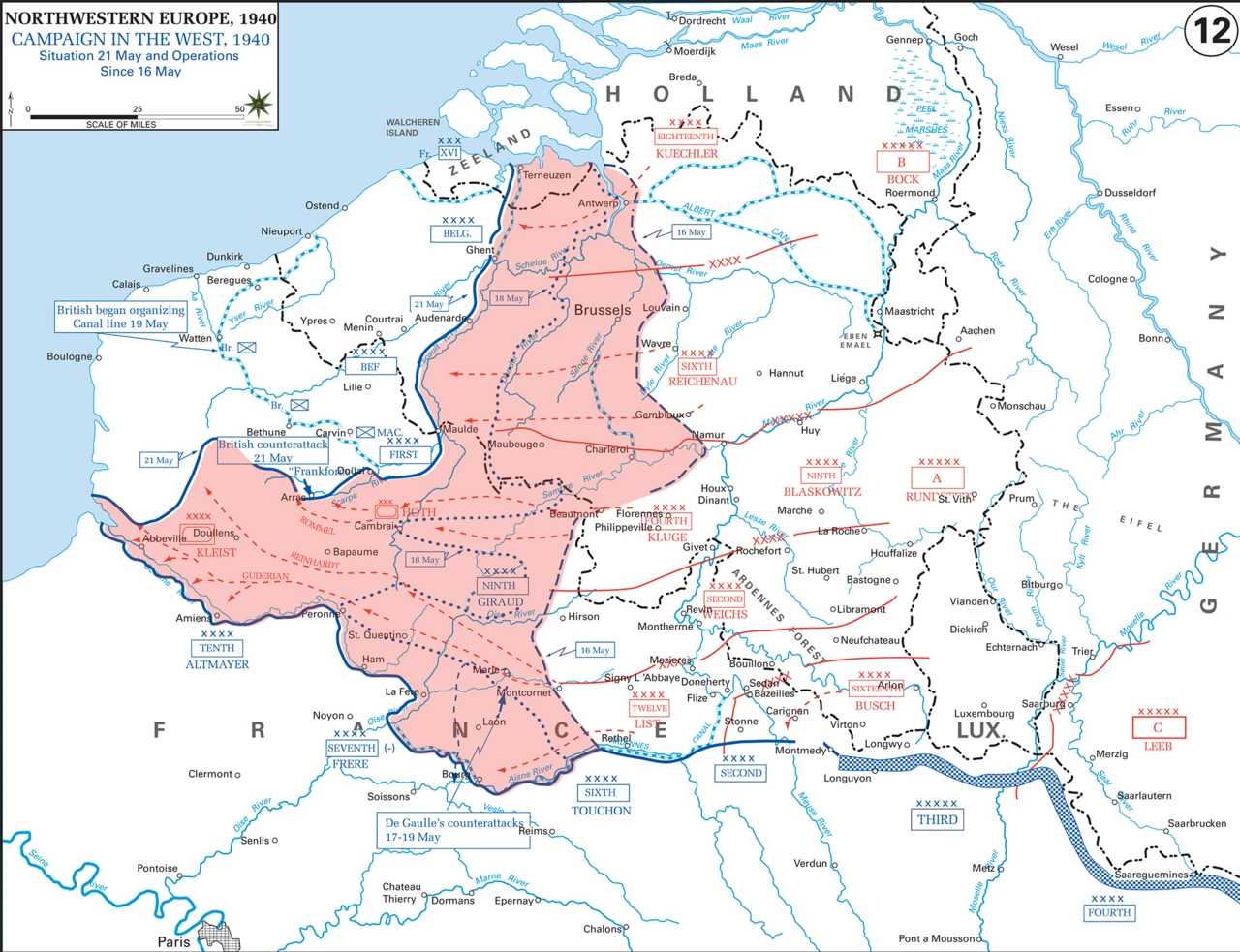
Between the Meuse and the Dyle opens the plain of Gembloux, a corridor without natural obstacle through which the German armour could debouch towards Brussels and beyond. It was there that the French , one of the best in the Allied order of battle, came to take up position to halt the enemy advance after the withdrawal of Prioux's Cavalry Corps.
The French command had to fight a decisive defensive battle there. For want of fortifications, everything rested on the solidity of the infantry and artillery and on anti-tank coordination. To hold firm at Gembloux was to protect the flank of the Allied dispositions in Belgium; to give way was to risk collapse.
The command could hold the Gembloux position at all costs to stop the Panzers dead. It could conduct an elastic defence, yielding ground to preserve its forces. Or it could withdraw at once to a more rearward, better-protected line. The stakes were to prove that the French army could, on chosen terrain, break the German armoured assault.
Should the 1st Army hold Gembloux at all costs, conduct an elastic defence, or withdraw?
The chose A and, on 14–15 May, won at Gembloux one of the Allies' rare defensive successes of the campaign: the French infantry repulsed the Panzer assaults and inflicted heavy losses, proving that a well-conducted defence could check the "Blitzkrieg". But this local victory was rendered useless by the collapse of the front on the Meuse, at Sedan and Dinant, far to the south: threatened with encirclement, the had to abandon its positions and withdraw. Gembloux symbolises the tragedy of 1940 — an army capable of winning tactically, but doomed by a strategic debacle that occurred elsewhere.
Learn more about this event
Related polls
10

The abatis of the Chasseurs Ardennais
The Battle of the Lys
The bridges of the Meuse
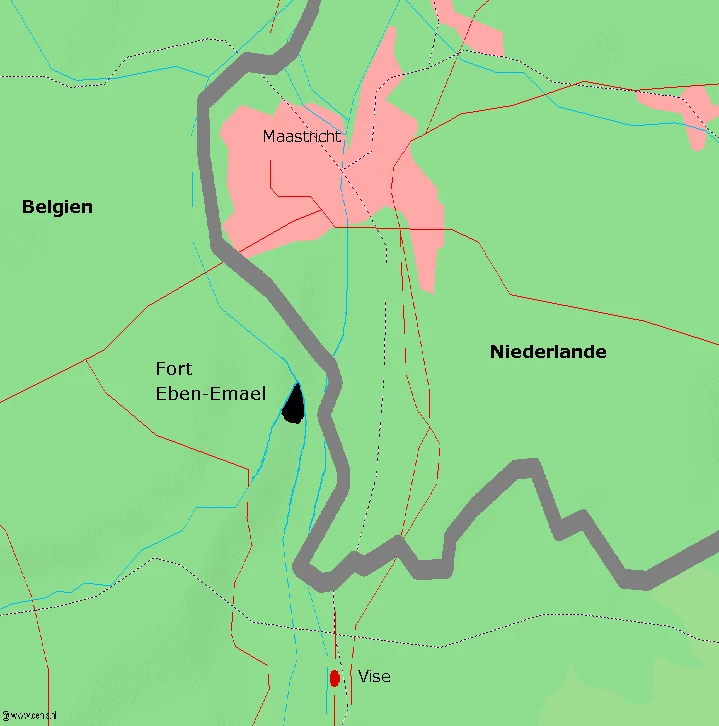
Eben-Emael — Jottrand under the explosions
Kanne bridge — fourth airborne target
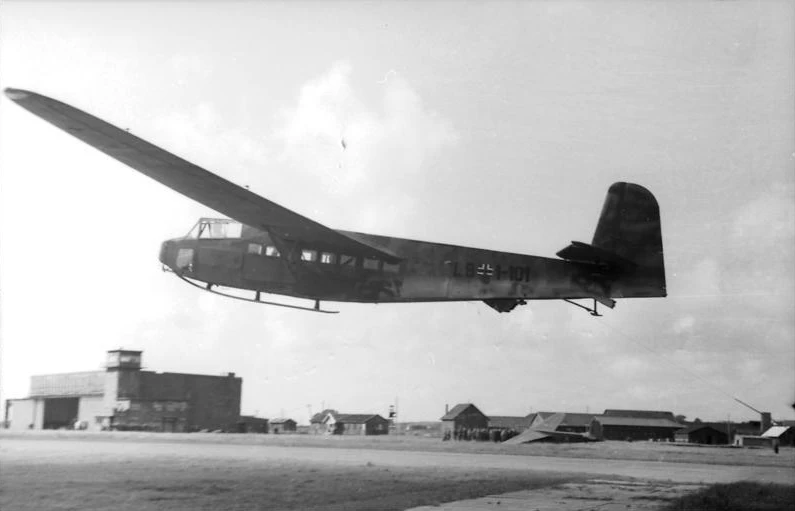
Veldwezelt bridge — Beert and the demolition officer
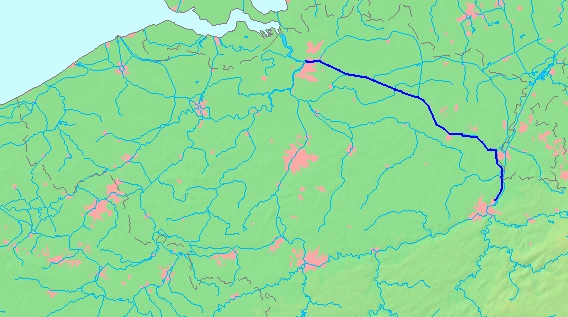
Vroenhoven bridge — the demolition order
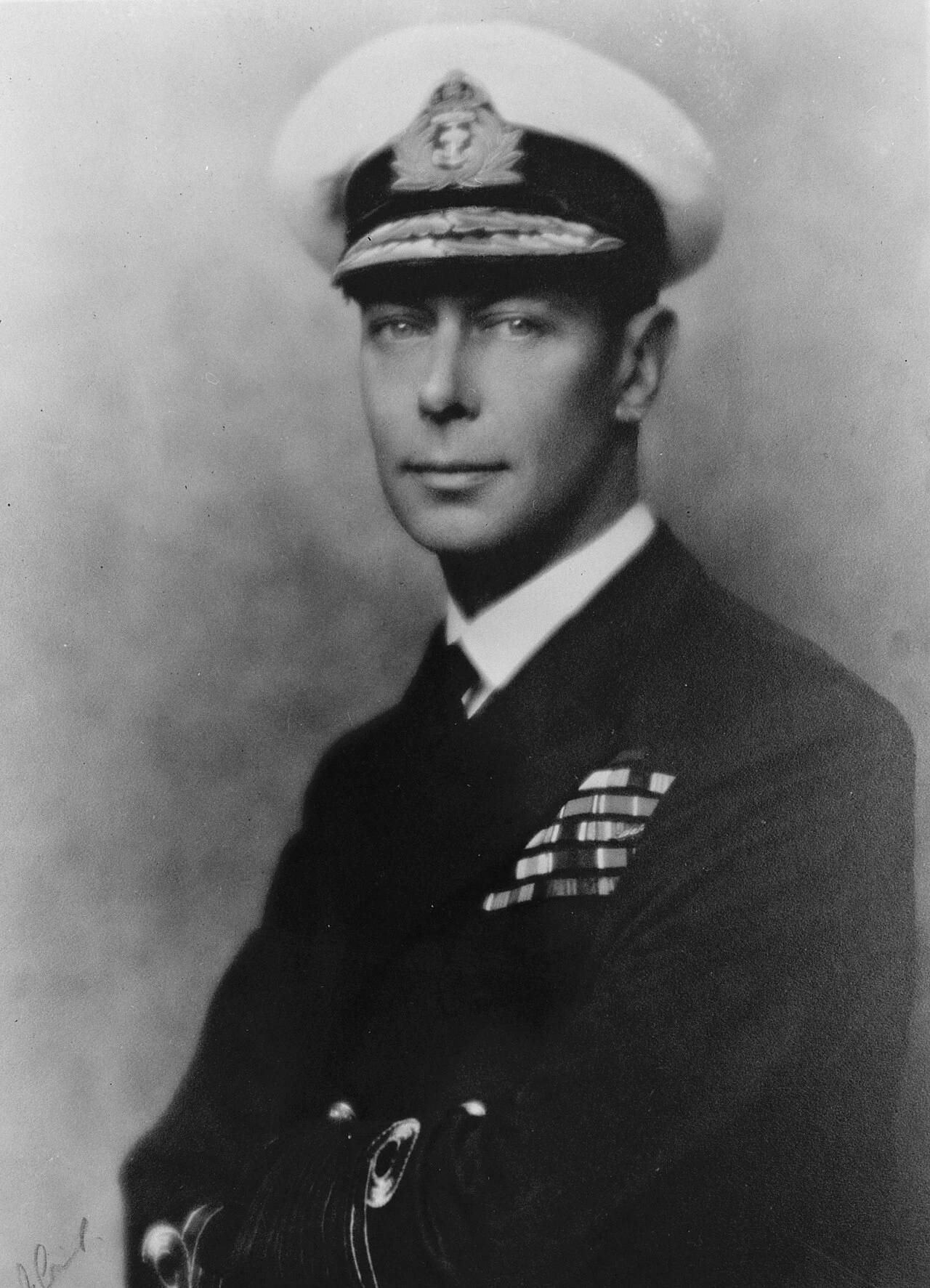
The bridges of the Albert Canal
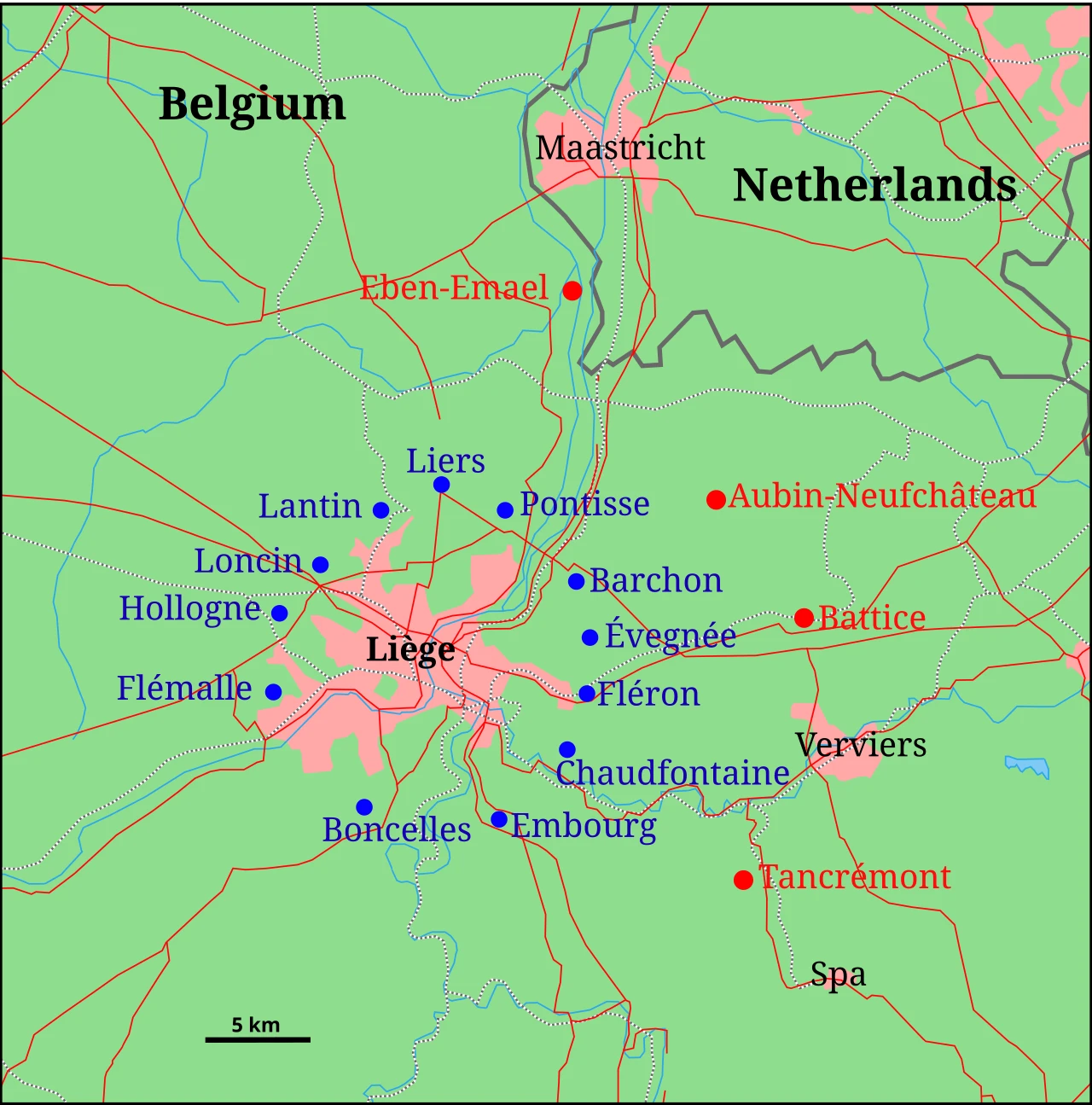
The fortified position of Liège
Boulogne — Fox-Pitt and the Guards facing the port
The abatis of the Chasseurs Ardennais
The Battle of the Lys
The bridges of the Meuse
Eben-Emael — Jottrand under the explosions
Kanne bridge — fourth airborne target
Veldwezelt bridge — Beert and the demolition officer
Vroenhoven bridge — the demolition order
The bridges of the Albert Canal
The fortified position of Liège